

Inside Duke Energy's renewables strategy
Utility-scale and distributed solar play into the long-term growth plans of America's largest utility
For decades, the name Duke Energy has been synonymous for many observers with a single generation resource: Coal. The nation’s largest electric utility company has historically been one of the biggest generators and consumers of coal-fired electricity in the U.S., and disasters related to the resource — like 2014’s coal ash spill in North Carolina’s Dan River — mean that many in the general public still equate Duke Energy with coal energy.
But Duke, like other coal-heavy utilities, has been moving away from the resource in recent years, spurred by low natural gas prices, renewable energy mandates, and EPA regulations. Last year, the utility reported that its regulated utilities generated 42% of their power from coal. That’s still a significant slice of the company's generation mix, but it’s a marked decrease from the roughly 70% of electricity that Duke’s utilities generated from coal in 2008. Duke has retired more than 4,400 MW of coal power in the past five years, according to its 2014 sustainability report, and has more than 1,800 MW of coal scheduled to go offline by 2018.
That move away from coal coincides with a push into renewable energy in both the company’s regulated utilities and unregulated energy developers. Last year, Duke Energy Progress, the company’s regulated utility in North and South Carolina, added 161 MW of solar, the most of any utility outside of California. While Duke got nearly none of its power from renewables a decade ago, it now owns or contracts for more than 3,000 MW of wind, solar, and biomass, accounting for about 2% of its generation portfolio. By 2020, it aims to increase that to 6,000 MW.

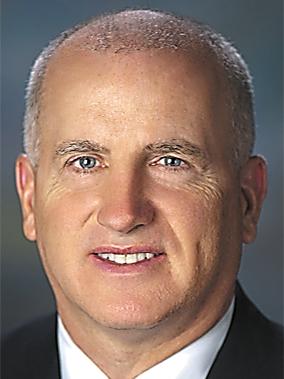
In an interview at Duke Energy headquarters in Charlotte, North Carolina, late this spring, Robert Caldwell, senior vice president for distributed resources at the company, told Utility Dive that renewable energy growth won’t stop there. With renewables costs falling and customer demand for clean energy rising across its service areas, Duke’s regulated utilities are looking at renewables — both utility-scale and distributed — as growth opportunities for decades to come.
Why Duke decided to move into renewables
As was the case with many utilities, Duke’s original interest in renewables was piqued by proactive public policy. In early 2008, North Carolina enacted its first renewable energy portfolio standard, which requires the state’s utilities to source 12.5% of their generation from renewable resources by 2021 and established a renewable energy credit program.
That mandate meant that suddenly “there was a way to recover the premium cost of solar in particular, but also biomass and wind and swine and poultry waste and other renewables,” Caldwell said. The state then implemented a 35% tax credit for renewable energy projects on top of the 30% federal tax credit. Together, the policies dramatically improved the value proposition for renewables, including solar, in a state with electricity rates well below the national average.
“When you added all those things together, it started to make solar pencil out for developers,” Caldwell said. “We’re watching the price curve in all jurisdictions, but it was really North Carolina, because of its combination of federal and state tax credits and an RPS, as well as favorable incentive treatment, that made us say ‘Hey, we can make this work here.’”
Meanwhile, around 2008, Duke saw a “significant increase” in the number of interconnection requests it was getting from customers trying to link new rooftop solar arrays to the grid, showing it that consumers were clamoring for more clean energy.
“At the same time we were thinking about where our customers stand,” Caldwell said. “Customers want more [renewables], whether they believe in greenhouse gas [impacts] or not. It’s not really about the science — it’s about making people feel good. So, we thought we’ve got to get into the space, and it makes sense.”
To Caldwell, Duke’s transition to new generation resources is nothing new.
“We’re a generating company,” he said. “We went from hydro to coal to nuclear to natural gas, and now we’re on to solar and other renewables. So I see this as an evolution of the generation portfolio. We’re a generating company, so we’ve got to be a part of that.”
Utility scale vs. distributed renewables?
For Duke, being “part of” the renewable generation game has meant only utility-scale renewables -- at least for now.
“Most of the growth in North Carolina has been ground-mount, megawatt scale, utility scale,” Caldwell said. “So, most of the penetration you see here, the 600 MW or so, are large installments. We’ve got about 30 MW of rooftop in the state.”
The reason for that, Caldwell said, isn’t because Duke is disinterested in distributed generation. But in a place like North Carolina, where electricity rates are lower than the national average, utility scale solar installations have proved more cost effective for the utility than getting into rooftop solar itself.
“As a generating company, if our goal is to put the most solar on the grid, to have the most fuel efficient generation we can, the cleanest generation we can, at the best price we can, then these large ground mount projects are the most cost effective way to do it,” Caldwell said.
But that paradigm may be about to change at Duke.
Caldwell confirmed to Utility Dive that Duke is “looking at” developing, owning and operating rooftop solar through its regulated utilities in the Carolinas. He could offer no details, as the plans are still in their early stages, but expressed confidence in the prospect of Duke installing solar on customers’ homes. [empasis added]
“We haven’t decided how we're going to go into that business yet,” he said. “All I know is some of our customers, based on the polling and the research that we do, if we had an offering they would buy from us.”
“I don’t have a specific offering,” he added. “So, there’s no price, there’s no terms, there’s no nothing. But that’s what they say.”
Customers like the idea of buying their solar panels from an established company, Caldwell said, one that has been around for a century and they figure will be there for the long haul. But while Duke’s internal metrics may be telling them that customers would embrace their entrance into the market,some solar market players aren’t so thrilled.
Utility ownership of distributed solar
Today, most rooftop solar arrays are installed by third party providers like SolarCity and SunRun — not regulated utilities. But as solar proliferates, its residential adopters pay less money to the utility because they can generate or offset a portion of their electricity demand. That means utilities — many of them already facing stagnant or negative load growth — can see significant portions of their revenue lost if solar catches on among their customers. Worse, they argue, solar adopters still use the grid, but pay less for its upkeep, forcing those costs onto other customers.
Different utilities have approached the problem in different ways. Many have looked to reduce the financial impact of rooftop solar on their companies by increasing fixed charges on customers or reducing net metering rates. But increasingly, utilities are taking the “if you can’t beat ‘em, join ‘em” approach and announcing plans to get into the rooftop solar market themselves.
Arizona utilities Arizona Public Service and Tucson Electric Power are currently implementing utility-owned rooftop solar pilots in their service areas — the first such programs from investor-owned utilities in the country. And last month, Georgia Power announced that it will begin offering solar installment services in July. As Tom Fanning, CEO of Southern Company, Georgia Power’s parent company, said at a recent conference: “If distributed generation is eroding your growth, own distributed generation!”
Utilities' attempts to get into the rooftop solar market have largely been met with intense antipathy from many in the solar industry, particularly the big national players such as SolarCity. Allowing utilities to rate base rooftop solar investments like they do for other generation resources, they say, gives power companies an unfair competitive advantage over other installers, who cannot recover investment costs the same way. Not only that, but the utility already has a relationship with ratepayers in its service area, giving it a serious leg up on customer acquisition.
“I hear their arguments,” Caldwell said when asked about potential anticompetitive impacts of utility-owned rooftop solar, “but I don’t see it.” Part of the problem, he said, is that solar advocates assume that utilities like Duke get a guaranteed return on investment for generating assets like solar arrays.
“That’s a misnomer. We have the opportunity to earn an authorized return,” he said. “We don’t always do it. It’s not guaranteed. If we don’t earn it, we don’t get to go back and get it. So we don’t have a guaranteed return; we have an opportunity to earn an authorized return.”
Regulators in other states have paid close attention to that rate basing question when it comes to distributed solar. For the APS and TEP pilots, regulators on the Arizona Corporation Commission approved the pilot programs, but delayed a decision on cost recovery until a later date, yet to be specified.
Many industry watchers assume that when a utility says it’s going to rate base distributed energy investments, they are going to spread the costs of that investment to all their ratepayers. But, Caldwell said, utilities can design rooftop solar programs so that only customers installing solar bear the costs.
“I can structure the transaction between you and me where I own your rooftop solar panel and you pay a little charge and [other customers don’t] get charged for it at all,” he said. “Just because I own it doesn’t mean I rate base it and socialize all the costs.”
Caldwell said that if utilities use their rate basing power to sell solar at lower rates than their competitors can offer, then he sees the logic of the solar industry’s anticompetitive concerns. But, he said, “if I sell it to you at ‘Price X’ and they can sell it to you at ‘Price X,’ then I don’t understand the difference.”
Caldwell said that Duke already offers a green energy rider for companies looking to integrate more renewable energy into their portfolios, and that program provides an example of what a well-structured rooftop solar offering could look like. Under the program, Duke will go out and work a renewable energy deal for large customers, and then add a tariff to the individual customer’s bill each month to cover the difference between the cost of renewable energy and Duke’s usual rates.
“That tariff is set up so only that customer pays for the cost. We don’t socialize the cost. So there isn’t any anticompetitive nature there from my perspective,” he said. “I think you’re gonna see more and more utility tariff, utility offerings to give customers what they want. We’re doing this because customers want it and we’re doing it in a way that is fair.”
The arguments for utility-owned rooftop solar
While the solar industry points to the utility industry's unfair advantage when it comes to acquiring customers — typically one of the biggest bottlenecks for market players — Caldwell believes that Duke’s unique knowledge of its ratepayers and grid capabilities could make it a more effective installer than others. Far from inhibiting the growth of rooftop solar, Duke could help solar better serve the grid if it entered the DER business, Caldwell argued.
“Who better to own solar generation, optimize it, put it on the grid, put it in the right place, operate it, maintain it, and make sure it’s going to be viable for its useful life, than the utility?” Caldwell said.
While Duke has some pumped hydro in the Carolinas, most of the time it has to balance supply and demand every four seconds without the benefit of energy storage. Caldwell argued that rooftop solar is just another resource that they should have control over to deliver electricity reliably and at the lowest cost possible.
That narrative — of distributed generation not being different from other sources — is becoming more popular among big utilities. Southern’s Fanning told the audience at a recent industry convention that he doesn’t see distributed energy as a disruptive force on the grid — it’s just another generation resource, he said, echoing Caldwell.
Solar advocates see the issue differently. While utilities say they want to optimize the system, what they really want to do is control the growth of rooftop solar so it doesn’t hurt their more traditional revenue streams, the installers argue. To that point, Caldwell said that Duke has no plans to curtail installments from other solar companies.
“We’re not going to own it all,” he said. “I can’t stop you from putting solar on your roof and I don’t want to. But I think if customers want solar on their roof and Duke is a competitive supplier of that, then you ought to have the option as a Duke customer to have us do it.”
The third party ownership debate
In addition to the controversial question of utility-owned distributed generation, Duke has also been involved in debates around third party ownership (TPO) of rooftop solar. In states where it is permitted by regulators, TPO arrangements allow customers to lease solar panels from a financier over many years instead of owning them outright. For many consumers, this option has significantly boosted the solar value proposition. In 2014, TPO accounted for more than 70% of all U.S. residential solar installations, according to Shaye Kann, senior vice president of GTM Research and lead author of the 2014 Solar Market Insight Report.
Duke recently came to a settlement with solar advocates and environmentalists in South Carolina to legalize TPO, but is currently opposing a similar bill in its home state of North Carolina. Combined with the fact that Duke’s unregulated renewables subsidiary takes advantage of TPO opportunities in other states, this has led some environmentalists and solar advocates to assert that Duke is trying to limit the growth of solar in its own service territory.
But Duke’s opposition to HB 245, the North Carolina TPO bill, has nothing to do with limiting solar, according to Caldwell. The South Carolina agreement is “drastically different” from the TPO bill to its north in that it preserves the utility’s right and obligation to serve all customers.
In South Carolina, he explained, customers can finance and buy panels from a third party provider, but only Duke may engage in direct sales of electricity. If a business, for instance, with a large solar array on its roof wants to return power to the grid, it must go to Duke, which then can resell it to customers. That’s different from the North Carolina proposition, where the TPO bill would allow other companies, such as renewables developers, to bypass the utility and sell power directly to consumers.
Passing HB 245, dubbed the “Energy Freedom Act,” could erode the regulatory compact in North Carolina, Duke officials worry.
“I have a franchise obligation that gives me the right to serve, and it gives me the obligation to serve,” Caldwell said. “So, I can’t pick and choose which customers I serve. I serve all.”
Caldwell argued that the current regulatory structure is serving customers in the Carolinas well already. Price are low, reliability is high, and the fuel mix is increasingly clean, he said, so there’s no need to compromise the utility’s right to serve to moderate prices or spur renewables investment.
“We’re not a deregulated state like some others — to our customer’s benefits if you look at our prices,” he said.
Renewables advocates say that clean energy could grow even faster if direct sales of electricity were allowed from third parties. The competition, the argument goes, could push utilities to either adopt more renewables or reduce their prices if vendors can undercut utility prices.
Caldwell said Duke welcomes the competition, but that anyone trying to sell electricity on the company’s grid needs to pay for it, and third party providers won’t pay their share for grid upkeep if they sell power directly to customers.
“I’m fine with [TPO] if they want to pay us what it costs to stay connected to our grid so they can use our grid every four seconds,” he said. “There isn’t a second in the day that a rooftop solar customer doesn’t use our grid. So I think what we’re arguing about is what should they pay for our grid. Some of those people think they should pay nothing for it.”
It all comes back to price, Caldwell concluded. If you could generate rooftop solar for 2 cents/kWh, then providers wouldn’t worry about paying a 4 cent/kWh grid fee for electricity, he said, because that 6 cent/kWh rate would still be less than the roughly 9 cents/kWh that Duke charges customers. But because it's still difficult in the low cost environment of North Carolina to make rooftop solar economics work, many installers don’t want to pay to use the grid.
“If not for our grid, they couldn’t sell their excess back, they couldn’t balance their system, their motors wouldn’t start and they wouldn’t have electricity at night. So I think what we’re talking about here is not that they can drive their cost lower, but how much it should be incented or how much they should pay for how much our grid brings,” Caldwell said. “I think the argument in North Carolina and in the Southeast is perhaps that it’s hard to make the economics of rooftop generation at today’s cost work without some sort of subsidy. So I think we’re just talking about price.”
Solar advocates see the issue differently. They say the value of solar on the grid is higher than the value Duke assigns it, and argue that if the utility really isn’t afraid of competition, it shouldn’t be afraid of HB 245.
Duke has repeatedly said that instead of tackling TPO in an individual bill, it prefers to craft comprehensive electricity policy legislation with all the relevant stakeholders at the table, as it did in South Carolina.
South Carolina “was a collaborative approach,” Caldwell said. “We dealt with third party sales, we dealt with rooftop, we dealt with incentives, we dealt with a lot of these issues and got to a settlement. I just think it’s bad public policy [to go one by one].”
“I know there are many states that go at this issue by issue and it seems like they do a little bit more fighting than getting anything done,” Duke Spokesman Randy Wheeless added.
But solar advocates say that the calls for collaboration are more about slow-walking solar’s growth than trying to expand the resource.
“We don’t want to discredit what is happening in South Carolina, but they are at a much different stage of solar development than North Carolina.” Allison Eckley, communications director for the North Carolina Sustainable Energy Association (NCSEA), told Utility Dive.
Eckley’s group argues that North Carolina’s solar market is advanced enough that it doesn’t need Duke’s support, like in South Carolina. Instead, they say, regulators should be looking to remove regulatory barriers.
“Tabling actions like the third-party sales bill in favor of a working group or study will only delay progress," Eckley said. "There's simply no reason to remain one of just five states in the nation to ban this common-sense, free market business model that will benefit all North Carolina ratepayers.”
HB 245 is currently stalled in the Committee on Public Utilities in the North Carolina House, where it has been since March, but solar advocates may not need to pass it to get TPO sales approved. Last week, the environmental advocacy group NC WARN set up a test case with regulators, filing an application to sell power directly to a church from a rooftop array, bypassing Duke Energy. Because selling the solar power is “in the public interest,” NC WARN says, current North Carolina law should allow them to sell directly to the Greensboro congregation. Regulators on the North Carolina Utilities Commission have yet to weigh in.
Community solar, energy storage, and grid defection
While rooftop solar gets a lot of attention for the policy questions it raises, it is only one slice of Duke’s distributed and renewable energy strategy. On the solar side, the utility is moving into community shared facilities as well, hoping to provide clean energy to customers whose homes aren’t suitable for rooftop panels.
“If you look at what we’re doing in South Carolina where we’ve got a proposal as part of a DER program to do a shared solar offering, [...] we’re looking at it across the jurisdictions,” Caldwell said.
“I think that shared solar is going to be an important part of our portfolio going forward,” he continued. “Even customers that have good roofs for solar might not want to put solar on it, but they still might want to participate in solar, so I think a shared solar approach is the best way to do that.”
Duke is also investing in energy storage solutions across both its regulated and unregulated businesses.
“We’re testing the usage and we’re testing the chemistries and we’re testing how they cycle and what benefits they can bring,” Caldwell said. “That cost curve looks as attractive as the solar curve — it’s coming down. When we fast forward, we’re going to see the price of solar continue to come down, maybe flatten a bit, but the price of battery tech is coming down, so were testing that.”
“We’ve got about 8 or 9 projects going on right now where we’re testing different chemistries for different uses,” Caldwell said. “One of them is 36MW. It’s some pretty good sized batteries.”
But even as solar and storage technology continue to proliferate, Duke doesn’t anticipate big problems with grid defection — customers leaving the utility grid entirely and relying on self-generated power.
“I think there will be some customers that will do that, but I think there’s a lot of our customers that aren’t going to want to be bothered with being in the generation and storage and distribution business,” Caldwell said. “They'd prefer to just come home and flip a switch.”
“We’ll have some [defection], and I think we’re ready for that,” he continued. “We’re not going to stop that, and we're not trying to stop that. If they want to use our grid, we’re going to have to figure how to be compensated for that. And if they want to just go off the grid — bring it on.”
--------------------------------------------------------------------------------
IndianaDG Editor's Note: During the 2015 session of the Indiana General Assembly the introduced version of HB 1320 (2015) stated:
Sec. 14. An electricity supplier may offer distributed generation
and other renewable energy services to customers.
FYI, this language might come back again during the 2016 session of the Indiana General assembly. IndianaDG will be watching.
The real issue here is whether a regulated monopoly such as Duke Energy Indiana should be permitted to compete directly with independent solar installers. Or should such activities be conducted by a separate subsidiary instead to reduce potential cross subsidization.