


CAC: Final Data Shows Canceling Energizing Indiana was a Mistake

Posted by Laura Arnold  /   June 11, 2015  /   Posted in 2014 Indiana General Assembly  /   1 Comments

CAC logo

 For Immediate Release   June 11, 2015                       


Contact:   Kerwin Olson (317) 702-0461 ;  Jennifer Washburn (317) 796-3335

Final Data Shows Canceling Energizing Indiana was a Mistake

Created nearly 19,000 Hoosier jobs, Proved Cost Effective at 4 cents/kWh


INDIANAPOLIS – The final evaluation report for former Governor Daniels’ statewide energy efficiency program, Energizing Indiana, was filed this week at the Indiana Utility Regulatory Commission and presented bittersweet news for the State of Indiana and Hoosier consumers.  The report confirms that the Indiana General Assembly and Governor Mike Pence’s decision to cancel the programs in 2014 was a monumental and tragic mistake that has cost the State of Indiana thousands of jobs and will drive up monthly bills for already struggling Hoosier consumers.


The report clearly demonstrates that the energy efficiency programs were reducing energy consumption, saving ratepayers money, and resulting in significant private sector job creation.


Highlights of the evaluation report showed:


  • Energizing Indiana created approximately 18,679 jobs.
  • Over the three-year life of the program, Energizing Indiana was cost-effective, acquiring energy efficiency resources at $0.04 per kWh per year.
  • In 2014, Energizing Indiana realized 399,432 MWh in verified energy savings, which is enough electricity to power 37,886 homes per year.
  • Continued savings from the work performed in 2014 will achieve over 3,634,835 MWh in energy savings for Hoosier consumers.
  • For every $1.00 invested, Energizing Indiana saved ratepayers $2.94 in future energy related costs over the three-year life of the program, including generation, transmission and distribution.


“The fact that Governor Pence and the Indiana legislature rushed to cancel the Energizing Indiana program in 2014 is pathetic and Hoosiers should be outraged,” said Executive Director Kerwin Olson. “No public hearing was held, nor did the administration or the legislature have the foresight, or even the common sense, to wait for this report or conduct a study to evaluate Energizing Indiana, which took years to develop at the IURC and involved numerous public hearings and input from multiple stakeholders. It’s become clear that when it comes to energy policy, those in the Indiana Statehouse have failed to serve the public’s best interests instead bending over backwards to lick the boots of the monopoly utilities and other special interests.”


The 2014 Energizing Indiana Evaluation Report can be found here: https://myweb.in.gov/IURC/eds/Modules/Ecms/Cases/Docketed_Cases/ViewDocument.aspx?DocID=0900b631801c7d3d.


Vigo County (IN) Council Denies Tax Abatement for Cypress Creek Renewables solar farm

Posted by Laura Arnold  /   June 10, 2015  /   Posted in solar, Uncategorized  /   No Comments


No Tax Abatement for Solar Farm

Brett Edwards

An $8 million solar farm will be making its way to Vigo County, generating power for more than a thousand homes. Cypress Creek Renewables, a California-based company, will be building the farm on U.S. 150 near New Goshen.

Just last month, the Vigo County Council preliminarily approved a 10-year tax abatement for the solar farm. On Tuesday, the council held a public hearing on the issue before taking a final vote. Companies often seek a tax abatement from local entities and it reduces the amount of property taxes a company pays during the set time. Those entities look at a variety of ways that the company contributes to the local economy.

In the case of the new solar farm, it will employ only one person, who will work the grounds and maintain any and all activities. Attorney Mary Soliday represents the company, and said after feedback from the may meeting, they'll reduce their request to be a five year abatement. Soliday said the company feels the solar farm could attract other renewable projects to the county in the future. Well, the council voted to not allow a tax abatement at all. Councilman Bill Thomas feels this particular model does not support what an abatement is about.

"When you build a factory, we give you a 10-year abatement for example. You bring jobs, you bring, those people have to live somewhere. They're going to build houses. That expands our property tax base. They're spending money in our stores," Thomas explained. "That's just not the case in this instance."

Cypress Creek Renewables has already entered into a 20-year purchase agreement with Duke Energy. Construction will last around four months and should provide 60 to 80 jobs.

Indiana Governor Pence continues pledge to use every legal means to stop US EPA carbon rule

Posted by Laura Arnold  /   June 09, 2015  /   Posted in Uncategorized  /   No Comments

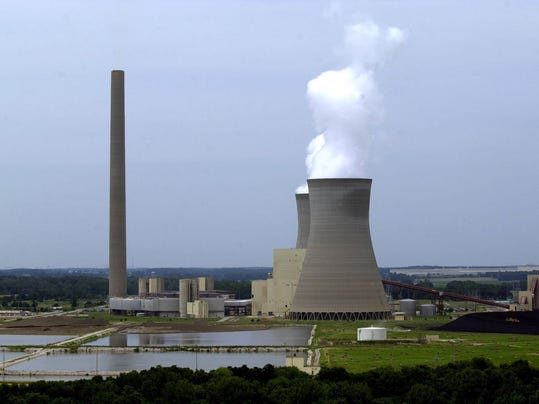
American Electric Power plant

GOVERNOR PENCE STATEMENT ON U.S. COURT OF APPEALS STATE OF WEST VIRGINIA ET AL V. ENVIRONMENTAL PROTECTION AGENCY RULING

Governor Pence Statement on U.S. Court of Appeals State of West Virginia et al v. Environmental Protection Agency Ruling

6/9/2015

Indianapolis - Today, the U.S. Court of Appeals for the District of Columbia Circuit dismissed State of West Virginia et al v. Environmental Protection Agency, Case No. 14-1112.  Indiana was one of fourteen petitioners in the case, which asked the Court to review the legality of the EPA’s proposed regulations limiting carbon dioxide emissions from existing power plants.  The Court held that it does not have the authority to review proposed agency rules.  In response, Governor Mike Pence issued the following statement.

“The Court’s decision is discouraging, but it does not dampen our resolve to use every legal means at our disposal to stop burdensome regulations. Though the Court declined to let the litigation proceed because of procedural matters, the Court’s decision did not speak to the substance of our claim that the EPA lacks the authority to regulate carbon dioxide emissions from existing power plants in the way proposed.  We will renew our claim and seek to invalidate the regulations once they are finalized later this summer.”

Contact Information

Kara Brooks
kbrooks@gov.in.gov
317-232-1622

Federal court halts Indiana challenge of power plant rules

LBNL: New Report Released on State and Local PV Program Response to Financial Innovation

Posted by Laura Arnold  /   June 07, 2015  /   Posted in solar  /   No Comments

A Survey of State and Local PV Program Response to Financial Innovation and Disparate Federal Tax Treatment in the Residential PV Sector

The residential PV market in the United States is currently characterized by declining installed costs, dwindling state and local PV incentives, booming demand, a high share of third-party-owned (TPO) systems in the largest markets, a growing appreciation of the benefits that host-ownership can provide, and a recent proliferation of solar loan products designed to encourage host-ownership and capture those benefits. Within this context, Lawrence Berkeley National Laboratory (LBNL) is pleased to announce the release of a new report  that explores how some state and local PV incentive programs have responded to this dynamic market environment by adapting their incentive offerings to help optimize their expenditures andmaintain their relevance. 

Though by no means uniform, these responses have generally fallen into two camps: (1) differentiating incentive levels between TPO and host-owned systems in recognition of the greater federal tax benefits provided to TPO systems, and/or (2) encouraging the spread of consumer-friendly solar loan offerings as a way to expand the number of available financing options and, in turn, consumer demand for solar. Both courses of action potentially help to preserve increasingly scarce public funding for PV by using incentives more as a tool to fine-tune the market rather than to stimulate it outright, and/or by shifting away from cash disbursements in favor of financial support that can better sustain program fund balances and potentially even provide a return on capital. At the same time, these types of responses are not yet widespread, perhaps in part because they raise questions about the role of state and local PV programs within the solar market, as well as possible impacts on solar deployment--both of which deserve consideration.


This report begins by describing the evolution of residential PV finance in the United States since 2007, focusing initially on the first wave of innovation that brought the rise of TPO, followed by the second and current wave of innovation involving solar loans, and paying particular attention to market drivers in each case. It then surveys the varied responses of state and local PV programs to this financial innovation, with most responses falling into one or both of the two broad camps noted above: differentiating incentive levels by ownership type, and/or providing support for solar loans. Finally, it discusses the various tradeoffs, considerations, and implementation challenges that confront program managers when fine-tuning their incentive offerings in these ways.


The report, as a well as a summary slide deck, can be downloaded here. LBNL appreciates the funding support of the U.S. Department of Energy's SunShot Initiative.


John Farrell of ILSR: The Hole in Brian Potts’ WSJ Critique of the “Solar-Panel Craze.”

Posted by Laura Arnold  /   June 03, 2015  /   Posted in solar, Uncategorized  /   No Comments

 The Hole in Brian Potts’ WSJ Critique of the “Solar-Panel Craze.”

| Written by John Farrell |No Comments | Updated on May 26, 2015The content that follows was originally published on the Institute for Local Self-Reliance website at http://www.ilsr.org/the-hole-in-brian-potts-wsj-critique-of-the-solar-panel-craze/

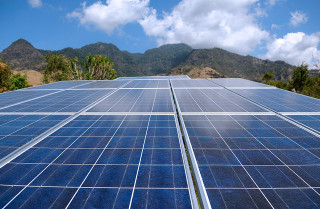
solar panels and mountains - flickr Bart Speelman

In his Sunday Wall Street Journal commentary on May 17, Brian Potts suggests that cost is the bottom line in the electric customer shift to solar, and that rooftop solar costs too much. But his defense of the utility’s view of energy costs leaves a big hole in the big picture: the value of solar energy and the cost of maintaining an antiquated system of monopoly control.

First, his cost estimates don’t add up. He claims utility-scale solar costs 13 cents per kilowatt-hour, but Vote Solar reported that the Palo Alto, CA, municipal utility signed solar contracts for 6.9 cents nearly two years ago. Prices fell 13% in 2014 alone, according to the Solar Energy Industries Association.

The attack on rooftop solar also falls short. The break-even price for a rooftop system in Palo Alto is 10.8 cents over 25 years (calculated with NREL’s System Advisor Model), 50% higher—not 3.5 times higher— than the utility scale solar array. Mr Potts may be right that net metering isn’t the perfect policy for compensating solar producing customers, but that’s because it’s a compromise accounting method to accurately track electricity sent back to the grid. This was done because it is the easiest way for the utilities to accommodate solar with their old meters and antiquated billing systems.

Net metering and Mr Potts both ignore the value of solar energy: to an electric grid that favors energy production in the afternoon and on hot, sunny days; as a zero-volatility fuel source; as a hedge against environmental compliance costs; as a near-zero water consumer in an era of drought. He ignores the numerous state studies that show a net benefit from net metering.

Most notably, Mr Potts ignores the opportunity cost of propping up a dying monopoly business model to fend off innovative entrepreneurs and customers. The rooftop v. utility-scale solar argument is a utility-contrived proxy for their defense of a 20th century model of monopoly control of the utility system.

Until recently, electricity service was similar to water or roads, where a natural monopoly was most efficient. Only a single, standardized electric grid was needed to connect each building. Technology options were limited to steam-powered turbines fueled by coal and oil, or large hydro dams with massive economies of scale. There was very little long-distance transmission of power, as each utility was responsible for electricity service within its own territory. Growth in demand was exploding and monopoly utilities could wield the most cost-effective financing for new power plants. These natural monopolies paid off for customers, with falling costs of reliable electricity even as demand rose rapidly.

But the 21st century electricity system is radically different.

The scale of electricity generation is rapidly shrinking, from coal and nuclear power plants that can power a million homes to solar and wind power plants that power a few to a few hundred nearby homes. Electricity demand has leveled off, so that every unit of new wind and solar power produced for the grid displaces a unit of fossil fuel energy. Batteries and electric vehicles provide new tools for distributed energy storage. Smartphones and smart appliances are giving electricity customers unprecedented opportunities to manage their energy use.

The utilities are loath to allow such competition—and have found spokesmen willing to adopt their “least cost” argument—but letting them cling to their antiquated monopoly is a cost we can’t afford.

This article originally posted at ilsr.org. For timely updates, follow John Farrell on Twitter or get the Democratic Energy weekly update.

Photo credit: Bart Speelman via Flickr (CC BY 2.0 license)

Copyright 2013 IndianaDG