


Author Archives Laura Arnold

Solar reform bill sailing to N.C. House floor vote Wednesday

Posted by Laura Arnold  /   June 08, 2017  /   Posted in solar  /   No Comments

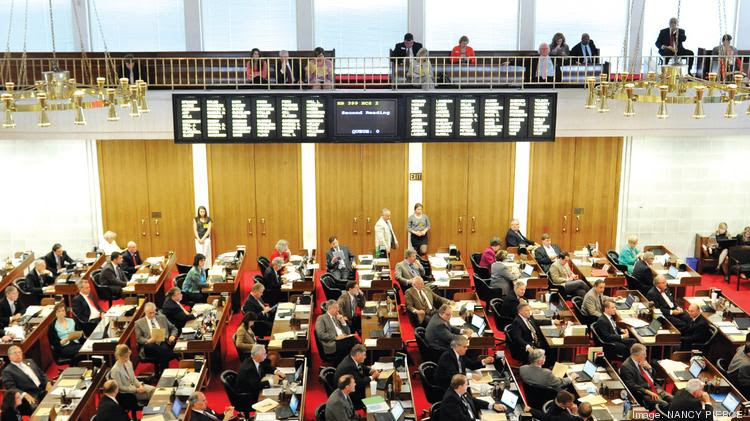
The bill reforming state solar and renewable energy regulations is slated to hit the House floor for a vote Wednesday.

Solar reform bill sailing to N.C. House floor vote Wednesday

The bill reforming state solar and renewable energy regulations is slated to hit the… more

NANCY PIERCE

Two N.C. House committees approved a bill mandating a competitive-bidding process for utility-scale solar construction and encouraging development of rooftop and community solar projects, sending it on to a first vote on the House floor Wednesday morning.

The House Energy and Public Utilities Committee, where the bill originated, passed it unanimously Tuesday morning and sent it on to the House Finance Committee for a vote at noon.

While there were a few questions raised and some skepticism expressed, the tone at the energy committee was almost unfailingly positive. Donald Bryson, state director for conservative group Americans for Prosperity, gave a short statement during the public comments on the bill. Though AFP had announced reservations about the bill on Monday, Bryson told the committee it “does far more good than harm” and said his group supports it.

Saving $850 million

On the much more liberal side was Rep. Pricey Harrison, D-Guilford, a committee member and longtime champion of solar and renewables in the state. She wondered aloud whether limits the bill imposes on new programs that would allow leasing arrangements for residential solar and development of community solar programs (neither currently permitted by state law) will prove too strict.

But she ended saying, “this bill does a lot of good for renewable energy in the state,” and supported it.

During the committee hearing, Kendal Bowman, Duke's vice president for regulatory affairs and policy, said that Duke estimates it would save about $850 million in solar power purchases over the next decade if the bill is adopted.

To arrive at that figure, Duke estimated how much solar power it would purchase from new projects over the next 10 years. It projected how much it would pay if the state's current regulations remained in place as well as its cost if the competitive bidding and other more market-based procedures in the bill were implemented. Those savings would be passed on to customers.

Direct hand

The brief and generally friendly sessions in the Legislative Office Building contrasted with the arduous — and sometimes contentious — nine months of negotiations that went into producing the bill.

The state’s dominant utility, Charlotte-based Duke Energy (NYSE:DUK), and the solar industry and its advocates were long at loggerheads over a consensus bill. Eventually, energy committee chairs Reps. John Szoka and Dean Arp took a direct hand in forging the consensus bill. The agreement they worked out with the various sides was used as a substitute for the text of an innocuous bill in their committee that the pair had introduced in early April.

It settled at least parts of the battle between Duke and the solar industry by giving utilities more control over where and when new solar projects are built. It shortens the terms for solar contracts and significantly reduces the size of projects that qualify.

But it also establishes a bidding system for new solar construction. That is administered by an independent third party, assuring solar developers that they will not be completely at the mercy of Duke.

Encouraging rooftop solar

Duke’s two North Carolina utilities must agree to purchase about 2,660 megawatts of solar through the system through roughly the end of 2020.

And those projects that go through the bid process will be able to have the longer contract terms that utility-scale solar developers say they need to make their projects financeable.

It also has several provisions that could boost what a close-to-moribund rooftop solar industry in the state. It requires Duke’s utilities to develop a rebate program for a residential and commercial rooftop solar program. And it would allow solar installers to lease projects to customers, to reduce upfront costs for roof top solar.

Leasing programs would be limited to 1% of peak demand for each utility.

Community solar

And the bill sets up rules for community solar programs. Each utility’s program would be limited to 20 megawatts total, and it must offer the power to customers in its service area. No solar farm in the program could be larger than 5 megawatts.

The limits on those programs were one of the concerns raised by Harrison. But the leasing limit, at 1% of peak demand at Duke’s two utilities, would be 250 megawatts, says Duke spokesman Randy Wheeless. Across of all of North Carolina, Duke currently has only 50 megawatts of rooftop solar on its system. So Wheeless says there is plenty of room for growth.

North Carolina has long lagged in residential and commercial solar despite its strong utility-scale solar development. Low utility rates and some policy issues surrounding net metering have made solar less attractive here than in many top solar states such as California — the only state with more solar on the grid than North Carolina — Arizona and New Jersey.

Nevada Legislature Passes Bill to Restore Net Metering for Rooftop Solar

Posted by Laura Arnold  /   June 07, 2017  /   Posted in Uncategorized  /   No Comments

Nevada Legislature Passes Bill to Restore Net Metering for Rooftop Solar

Nevada Legislature Passes Bill to Restore Net Metering for Rooftop Solar

The legislation is on track to become law, which advocates say will reboot the state’s rooftop solar market. Tesla is already planning to enter.

by Julia Pyper
June 05, 2017

The Nevada State Legislature has passed a bill that's expected to revive the state's ailing rooftop solar market. The Assembly voted to approve a Senate version of the bill late Sunday night, with just a day remaining in the legislative session.

The bill (AB 405) would reinstate net energy metering for residential solar projects, but at a discounted compensation rate.

AB 405 would immediately allow rooftop solar customers to be reimbursed for excess generation from a solar system at 95 percent of the retail electricity rate. Over time, though, customer compensation would decline. The amended bill would create tiers, where credit rates decrease in increments for every 80 megawatts of rooftop solar generation deployed -- to a floor of 75 percent of the retail rate. A previous version of the bill lowered compensation in increments based on peak load.

If signed into law, AB 405 would also allow net-metered customers to lock in their rate for at least 20 years, eliminating the risk that rates could change retroactively. Other consumer protections are also included in the bill, like the requirement for solar companies to offer a 10-year warranty and to provide transparent information as to how they calculate customer savings.

Furthermore, the legislation ensures that net metering will remain the law of the land in the event Nevada voters decide to deregulate the state's electricity market. It also mandates that residential solar and energy storage customers cannot be treated as a separate rate class, which means these customers cannot be hit with higher fees for investing in distributed energy.

Governor Brian Sandoval has 10 days to sign the bill. If signed, the net metering compensation changes would take effect right away, and the consumer protection measures would take effect this fall.

Rooftop solar advocates, including the Solar Energy Industries Association (SEIA), say the bill will reboot Nevada's rooftop solar market, which has been effectively stalled since a 2015 policy change.

"This bill is a compromise that doesn't fully value the benefits of distributed solar," said Sean Gallagher, SEIA's vice president of state affairs, in a statement. "It will, however, allow Nevada consumers and small businesses that may have wanted to go solar, but found it uneconomic under the existing solar policies, to now proceed."

"The legislation also provides important consumer protections, ensuring that solar customers aren't placed in discriminatory rate classes and giving customers 20 years of certainty when they sign up to go solar," he added. "We believe that it will be able to get solar companies back to business in Nevada, creating jobs and investment."

A Tesla spokesperson said the company will begin selling rooftop solar and residential storage products in Nevada as soon as possible, adding,"We look forward to bringing even more jobs to the state in the years ahead to help provide residents with affordable rooftop solar and energy storage choices.”

Changes in the legislation come nearly a year and a half after the Public Utilities Commission of Nevada (PUCN) voted to eliminate retail-rate net metering for new and existing solar customers in December 2015. State regulators originally planned to phase out net metering over four years, but later extended the timeline to 12 years. Amid ongoing public opposition, the PUCN decided to grandfather existing solar customers onto their previous rates, but did not address the market for new solar customers.

Nevada lost more than 2,600 jobs after regulators eliminated net metering in late 2015. Major solar firms pulled out of the state, unable to find a way to make their systems pencil out economically for consumers.

“This is a victory hard won and a testament to the overwhelming support for rooftop solar in Nevada," said Alex McDonough, Sunrun’s vice president of public policy. "Nevadans have made it clear they want the right to generate their own clean energy and they want the good jobs and clean air that go hand in hand with a thriving solar market. [...] We look forward to Governor Sandoval signing AB 405 into law and appreciate his leadership in bringing rooftop solar back to Nevada.”

NV Energy, meanwhile, contends that restoring net metering would be very costly. The utility gave a presentation to the Senate last month that forecast AB 405 would cost more than $63 million each year, or about $1.3 billion over two decades. These calculations were based on a earlier version of the bill, however -- not the bill that passed yesterday. Solar advocates also pointed out that the utility did not account for any of the costs of transmission and distribution for utility-scale solar or the benefits of rooftop solar.

The Nevada State Assembly passed an earlier version of AB 405 in a vote of 38-2 in late May. The Senate version passed Sunday was approved by the Assembly late Sunday night. The bill now heads to the desk of Governor Sandoval, who is likely to sign it. Sandoval put together an energy task force last year that recommended restoring net metering in 2017.

This story was updated on Monday, June 5 to reflect that the bill passed in both the Senate and the Assembly, and to include additional information on the bill. 

Oregon legislature says HOA’s can’t bar rooftop solar

Posted by Laura Arnold  /   June 01, 2017  /   Posted in Uncategorized  /   No Comments

Legislature says homeowners associations can't bar rooftop solar

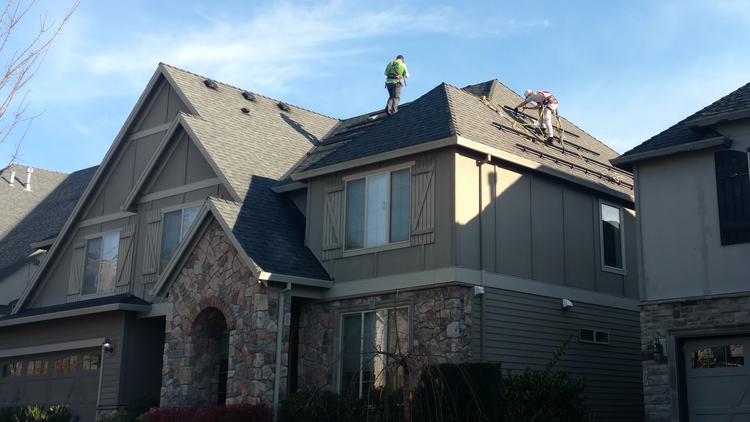
Homeowners associations won’t be able to deny Oregonians their right to go solar under a bill that passed the Legislature on Wednesday.

The bill, HB 2111, which sailed through the House more than a month ago on a 56-3 vote, passed the Senate 19-9.

Rep. Mitch Greenlick, a Democrat, was spurred to bring the bill by a constituent in unincorporated Washington County who reported that his homeowners association had flat refused to allow him to put solar panels on his roof.

“I think I started this in the 2013 session, so I’m really pleased that we finally got it done,” Greenlick said.

Gov. Kate Brown’s position on the bill wasn’t immediately known, but Greenlick said he couldn’t see any reason why she wouldn't sign it into law.

The bill was amended to include a provision that does allow a homeowners association to “adopt and enforce a provision that imposes reasonable size, placement or aesthetic requirements” on solar installations.


79th OREGON LEGISLATIVE ASSEMBLY--2017 Regular Session
A-Engrossed House Bill 2111
Ordered by the House April 14
Including House Amendments dated April 14
Sponsored by Representative GREENLICK; Representative HELM (at the request of Jerry Weinert)

SUMMARY
The following summary is not prepared by the sponsors of the measure and is not a part of the body thereof subject to consideration by the Legislative Assembly. It is an editor’s brief statement of the essential features of the measure.
Prohibits inclusion of provisions prohibiting installation and use of solar panels for obtaining solar access in declaration or bylaws of planned community.
A BILL FOR AN ACT
Relating to solar access for residential real property.
Be It Enacted by the People of the State of Oregon:
SECTION 1. Section 2 of this 2017 Act is added to and made a part of ORS 94.550 to 94.783.
SECTION 2. (1) Except as provided in subsection (3) of this section, a provision in a
declaration or bylaws of a planned community that prohibits an owner of the roof or other
exterior portion of a building or improvement on which solar panels may be installed from
installing or using solar panels for obtaining solar access, as described in ORS 215.044 and
227.190, is void and unenforceable as a violation of the public policy to protect the public
health, safety and welfare of the people of Oregon.
(2) An owner of record of real property subject to an instrument that contains a provision
described in subsection (1) of this section may file a petition to remove the provision
in the manner provided in ORS 93.272 for removal of a provision from an instrument conveying or contracting to convey real property.
(3) A homeowners association may adopt and enforce a provision that imposes reasonable
size, placement or aesthetic requirements for the installation or use of solar panels described in subsection (1) of this section.


IPL Indy 500 Parade Float Features Wind and Solar

Posted by Laura Arnold  /   May 26, 2017  /   Posted in 2017 Indiana General Assembly, solar, Uncategorized, wind  /   No Comments

IPL Indy 500 float 1

IPL Indy 500 parade float 4

IPL Indy 500 parade float 3

IPL Indy 500 parade float 6

The theme for the 2017 Indianapolis 500 Parade is

Accelerating the American Spirit

As you can see from the above photos, Indianapolis Power and Light's (IPL's) 2017 parade float theme is:

Accelerate Power

IPL's float then prominently displays both wind turbines and solar panels. So what is the message? Does it mean that IPL wants to accelerate power sources such as wind and solar? But did IPL really accelerate their customer's ability to exercise their own American Spirit, Energy Freedom and Energy Choice this year? Instead didn't IPL along with the Indiana Energy Association (IEA) lobby the Indiana General Assembly this year to enact SEA 309 which eliminates perhaps the single most important state policy for individual home and business owners to install small wind and rooftop solar known as NET METERING?

What do you think?

SolarWorld may close Oregon factory

Posted by Laura Arnold  /   May 23, 2017  /   Posted in solar  /   No Comments

BREAKING: SolarWorld may close Oregon factory

By Christian Roselund on May 22 2017, 7:29pm

The company has given WARN Act notices to all of its employees, and says that it is trying to determine the right size going forward.

Whatever criticisms that some in the industry have of SolarWorld, it is hard to say the the company is not transparent. Today, keeping in line with that the company’s U.S. subsidiary alerted the press that it had issued layoff notices through the federal Worker Adjustment and Retraining Notification (WARN) Act to all of its employees.

WARN Act notices are required to be given by companies with more than 100 employees at least 60 days in advance of mass layoffs or plant closures. It is notable that a number of the other solar companies who recently had mass layoffs did not provide WARN Act notice to their employees.

SolarWorld could not confirm any additional details, such as whether the company’s ingot, cell and module would be downsized and remain open, or close. “We are trying to determine what is the right size for the organization going forwards,” SolarWorld Director of Strategic Affairs Ben Santarris told pv magazine.

As a direct subsidiary of Germany’s SolarWorld, SolarWorld Americas has been in trouble since the parent company filed for insolvency in German courts 12 days ago.

SolarWorld employs 800 workers in Oregon, and the company says that for the time being it is continuing production. The HIllsboro factory is the largest crystalline silicon manufacturing facility in the Western Hemisphere, with over 550 MW of annual module production capacity and 430 MW of cell capacity.

Copyright 2013 IndianaDG