

Why This Tea Party Leader Is Seeing Green on Solar Energy; Interview with Debbie Dooley

Posted by Laura Arnold  /   March 26, 2015  /   Posted in solar, Uncategorized  /   No Comments

26 MAR 2015: INTERVIEW

Why This Tea Party Leader Is
Seeing Green on Solar Energy

As a founder of the Tea Party movement, Debbie Dooley may be an unlikely advocate for renewable energy. But in an e360 interview, she explains why she is breaking ranks with fellow conservatives and promoting a Florida ballot initiative that would allow homeowners to sell power produced by rooftop solar.

by diane toomey

Debbie Dooley’s conservative credentials are impeccable. She was one of the founding members of the Tea Party movement and continues to sit on the board of the Tea Party Patriots. She also serves as chairperson of the Atlanta Tea Party.

But on the issue of solar power, Dooley breaks the mold. To the consternation of some of her fellow conservatives, she has teamed up with the Sierra Club and other environmental organizations, first in

Debbie Dooley

Debbie Dooley

Georgia and now in Florida, to form the Green Tea Coalition. It’s an unlikely mix of conservative, environmental and other groups whose focus includes campaigning against the maintenance fees that utility companies charge solar customers. In Florida, the group is working to get an initiative on the ballot that would allow individuals and businesses to sell power directly to consumers.

In this interview with Yale e360, Dooley explains her motivations behind the solar energy campaign and why she’s willing to go up against conservative organizations when it comes to this issue.

Yale Environment 360: How did solar energy come to be such a priority for you?

Debbie Dooley: My foray into becoming a strong advocate for decentralized energy began with a fight with a government-created monopoly in Georgia, Georgia Power. I believed that they had far too much power. They received permission that would allow them to bill me, a utility customer, in advance for two nuclear reactors at Plant Vogtle in south Georgia that might never come online. Then I found out that there were massive [construction] cost overruns predicted on these two nuclear reactors. So, to add insult to injury, not only was I paying in advance for nuclear reactors that I may never see the benefit of because I could move out of state or drop dead or whatever, I was also paying for the cost overruns and [Georgia Power was] making a guaranteed profit off of the cost overruns. So it was a fight with a government-created monopoly that led me to do a lot of research into decentralized energy. Now, I support all decentralized energy.

The reason I am so focused on solar now is because I believe that solar empowers the people. I believe that solar equals energy freedom. The average person cannot go out and construct a new power plant, they can’t put a nuclear reactor on their rooftop, they can’t go out and build a big windfarm. But they can install solar panels on their rooftop and become energy independent. Also, during my research I found out that there is nothing more centralized in our nation nor at risk of a terrorist attack than our power grid. The National Energy Regulatory Commission found that a terrorist would just have to take down nine key substations out of more than 54,000 and it would cause a blackout from coast to coast. So that made it even more important and even more vital for me to push for decentralized energy and, in particular, solar.

e360: Describe how the Green Tea Coalition came about, and some of your member organizations.

Dooley: We’re made up of activists from different organizations. During my fight against Georgia Power, I was approached by Sierra Club’s Georgia chapter director, Colleen Kiernan, and some other activists from Sierra

The Sunshine State has policies put in place by these powerful utilities to stifle competition.’

Club, and it appeared that we both supported legislation that would cut the profits that Georgia Power makes on the cost overruns of their two nuclear reactors at Plant Vogtle. So we began to work together on that bill. And Colleen Kiernan also came to me about a Public Service Commission race that was taking place in 2012. She knew that I did not like the Public Service commissioner who was up for reelection because I saw him as a puppet of Georgia Power. So we met for lunch, and we started working together to advocate for the Georgia Public Service Commission to add more solar to Georgia Power’s integrated resource plan.

So the Public Service Commissioners decided that they were going to ask Georgia Power to add more solar to their integrated resource plan. Americans for Prosperity [a conservative political advocacy group] called it a mandate. It was not a mandate. They [Americans for Prosperity] said that electricity rates would increase by 40 percent. That was absolutely not true. They called it their Keep the Lights On campaign, and they ran ads that said, ‘Hey, if more solar’s added, your small appliances may not work, you may have blackouts.’ So we pushed back very strongly against Americans for Prosperity.

e360: Why it was important to get more solar energy into the portfolio of that company. In this case, we’re still talking about the grid and a monopoly.

Dooley: The reason that was important is because solar is relatively cheap. Every time a monopoly, a utility has to go out and construct an expensive power plant or nuclear plant, they make a guaranteed profit off of the construction. With solar, there’s no incentive for these utilities to build solar farms and create jobs because they don’t make as much profit because solar farms are a lot more economical than building a new coal plant or a nuclear reactor [the cost of which is passed on to ratepayers]. Georgia Power has finally seen the light as far as solar because they’ve agreed and they supported a third party solar leasing deal that passed the Georgia House of Representatives without one dissenting vote. And it’s expected to pass the Senate. A few months later, Georgia Power wanted to add a tax on solar users. They called it a fee, but we called it a tax. And we worked with Sierra Club to defeat that.

e360: You’ve been working to get an initiative on the 2016 Florida ballot that would allow individuals and businesses to sell power directly to consumers and would also allow for power purchase agreements in which solar companies pay the solar panel installation cost and homeowners then just pay for the power they use. You’ve described Florida as ground zero when it comes to solar energy. Why?

Dooley: They have a lot of policies in Florida that actually effectively block the sun. So you have the Sunshine State that has policies put in place by these powerful utilities to stifle competition, and I just felt like something needed to be done. So I started working with the Southern Alliance for

The funny thing is we got to know each other, and we understood that the stereotypes did not fit all of us.’

Clean Energy, and we formed a coalition that includes a couple of environmental groups, the Florida Retail Association Federation, and Conservatives for Energy Freedom. That’s the group that I formed last summer that consists of conservatives such as the Christian Coalition, the Libertarian Party of Florida, the Florida Republican Liberty Caucus, and a statewide tea party group called the Tea Party Nation. We’re pushing a ballot initiative allowing you to sell up to two megawatts, so it’s not like you can go out and build a giant solar farm and power the city.

And I think this ballot initiative is going to win. Within five to six weeks’ time, we collected over 100,000 signatures, with left and right working together. You have people [in the coalition] who don’t like coal, who believe in climate change, and you have some who don’t believe in climate change but they believe in free market choice and competition. And we’re all working together to do something good for the people of Florida because Floridians deserve choice.

e360: What’s it like for you to work with the Sierra Club?

Dooley: We actually work together pretty well. There are things we disagree on, but we don’t talk about them. I have always believed that the real power is with the people. And there are a lot of the elite, whether the progressive elite or the conservative elite, that want to keep all the power. They really don’t like the fact that the people, the grassroots, are deciding…

We’re going to work together to accomplish something. Those on the left believe in climate change and coal’s bad. Those on the right don’t like government-created monopolies — we believe in free-market choice and national security. It doesn’t matter what your reasons are, as long as we work together to accomplish a common goal. That’s all that matters, and we’re much more successful when we’re able to do that.

e360: So I imagine climate change is one of those topics that you don’t discuss over lunch with your Sierra Club counterpart?

Dooley: No. I don’t. I do believe man is damaging the environment. Now whether or not it’s [through human-caused climate change] or whatever it is, that’s something I really haven’t taken a position on.

e360: Do you think that there’s a political price to be paid for aligning

We’ve been manipulated by groups with interests in fossil fuel into believing green energy is bad — and that’s wrong.’

with groups such as the Sierra Club?

Dooley: Well, in the beginning, there was. When we first formed the coalition the Sierra Club’s members said, “We can’t believe you’re working with the Tea Party.” And our Tea Party groups said, “Oh, you’re working with the tree huggers, these militant environmentals.” But the funny thing that happened is that we got to know each other and we understood that the stereotypes did not fit all of us. So we ignored that and we worked together.

e360: Your archenemy on the Florida initiative, the conservative group Americans for Prosperity, says the initiative is about propping up an industry that depends on taxpayer-funded subsidies. What’s your position on the solar energy tax credit that’s due to substantially decrease in a couple of years?

Dooley: I would say 85 to 90 percent of the conservatives do not realize that coal and and fossil fuel have been very heavily subsidized since the 1930s and they are still being very heavily subsidized. During the first 15 years of nuclear — nuclear subsidies from the federal government accounted for one percent of the federal budget. Despite all the talks about the subsidies solar has received, solar during its first 15 years has only accounted for one tenth of one percent of federal subsidy.

I believe that subsidies are the government’s way of picking winners and losers. But it’s wrong to subsidize one energy form and then you let tax credits or subsidies expire for another energy form. So, to these elected officials who want the solar tax credit to expire, I say let’s expire all of the direct and indirect subsidies and tax credits that coal, nuclear, and oil are receiving as well. If they want to continue with the fossil fuel tax credits and the nuclear tax credits, then they should continue with the solar and wind tax credits. For every Solyndra they can point to, you can point to a nuclear reactor that’s over budget.

Conservatives need to do their research. Do your research and you’re going to come to the same conclusion that I have, that we’ve been manipulated by groups with interests in fossil fuel into believing that green energy is bad — and that’s wrong. Unless they’re going to expire the fossil fuel tax credits and nuclear tax credits all at the same time, then they need to keep the solar tax credit. If you take away all these subsidies, everyone’s going to see the true cost of energy in this nation.

e360: The Washington Post recently published an investigative piece on the strategy utility companies are using to combat the boom in rooftop

What’s fair about me being told I must purchase my electricity from a government-created monopoly?’

solar power. Part of that offensive involves monthly maintenance fees for customers with solar panels. Utilities say that’s only fair since these customers still need the grid occasionally and what’s more, without these fees, it’s the less affluent, who can’t afford to install solar panels, who’ll be left to bear the brunt of paying for the upkeep of infrastructure. What’s your take on that point of view?

Dooley: Well, I think it’s a tax. It’s an attempt by these utilities to keep an outdated model afloat for a few years longer. They tried that in Georgia, and we successfully fought it back. What’s fair about me being told I must purchase my electricity from a government-created monopoly? What’s fair about me having to pay for power plants in advance and to subsidize these utility companies’ unwise investments? And solar benefits everyone, it doesn’t just benefit the ones that have it. If there’s less wear and tear on the equipment, that means that they’re not going to have to buy new equipment. If there’s less demand for the very expensive daytime peak hours, that means they’re not going to have to construct new power plants.

e360: You often refer to your infant grandchild and your hopes for his future. You say that you want him to be able to be self-sufficient when it comes to powering his own home, and live in a clean world where he doesn’t have to worry

ALSO FROM YALE e360

With Rooftop Solar on Rise,
U.S. Utilities Are Striking Back

Rooftop Solar on the Rise

Faced with the prospect of a dwindling customer base, some U.S. power companies are seeking to end public subsidies and other incentives for rooftop solar. A heated public relations battle in Arizona could help determine the future of solar in the U.S.
READ MORE

about dirty air, dirty water, or dirty environment. That sounds like something any grandmother in the Sierra Club would say. So I’m wondering how much of your stance on solar energy has to do with energy independence and support of free markets versus creating a non-polluting source of power?

Dooley: Well, probably 75/25 — 75 percent free markets and national security, 25 percent I want clean air. I support all energy, I’m not anti-coal. I look at things from a fiscally responsible manner and any kind of cleanup or spill somewhere down the line … the taxpayers are ultimately footing the bill for it by virtue of tax credits, subsidies, etc. It’s a lot more fiscally responsible to stop the damage than it is to try to clean up and repair the damage.
Utility regulators hold emergency meeting on Downtown Indy explosions from IPL

Posted by Laura Arnold  /   March 24, 2015  /   Posted in Uncategorized  /   1 Comments

Downtown explosions: What's happening

Power outages, traffic gridlock and emergency meetings by utility regulators, but no injuries

Underground explosions rocked DowntownIndianapolis again Thursday morning. Here's a quick look at the situation:

What happened?

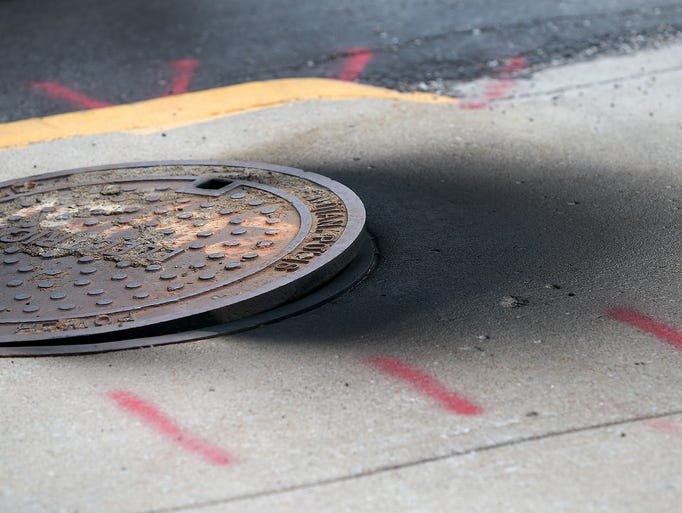
An underground fire near the intersection of North Capitol Avenue and West North Street caused several manhole covers to blast into the air around 6:40 a.m. Thursday.

Indiana Power and Light Co. closed the intersection and shut down power in a four- to six-block radius, which caused traffic gridlocks for Downtown commuters.

When will power be restored?

IPL slowly began restoring power around 10:30 a.m. and stated that most customers should be up and running by 4:30 p.m. However, 150 customers in the four-block area of Walnut Street to Michigan Street, and Senate Avenue to Illinois Street are expected to be without power into the weekend because of damaged equipment.

Will traffic be snarled throughout the day?

Crews will be working at the intersection most of the day. Several Downtown traffic lights were still out as of 4 p.m., and will remain off during rush hour.

Is the government getting involved?

The dangerous blasts drew concern from the city and the Indiana Utilities Regulatory Commission, especially as crowds will flock to Indianapolis in April for the Final Four games.

The commission is holding an emergency conference on Friday. The city is teaming up with IPL to conduct safety checks of manhole covers around the city.

Why does this keep happening?

Manhole cover explosions have plagued the city for years. A 2011 report from the IURC said IPL needed to revamp its maintenance and infrastructure to stop the problem. Officials said then that they were taking steps to maintain and "enhance" the electrical network.

What will be done to rectify the problem?

IPL announced Thursday it would install more locks on manhole covers in the city to secure them from flying into the air.

Utility regulators to hold emergency meeting on Downtown explosions

Ft. Wayne Journal-Gazette: Re-energized, Efficiency bill doesn’t serve consumers; Fix SB 412!

Posted by Laura Arnold  /   March 23, 2015  /   Posted in 2015 Indiana General Assembly, Indiana Michigan Power Company (I&M)  /   No Comments

March 23, 2015 1:01 AM

Re-energized

Efficiency bill doesn't serve consumers

When he allowed the measure to kill Energizing Indiana to become law last year, Gov. Mike Pence said he hoped a better energy-efficiency plan would emerge for this year’s legislative session.

But the plan that has passed the Senate and now awaits House floor action is a poor substitute for Energizing Indiana, a program that had proved very effective in helping Hoosiers cut their electricity use.

The cost of electricity in Indiana has traditionally been low, but our usage is much higher than in most states. Cutting our profligate power habits is both economically and environmentally urgent. But if the interests of Hoosier consumers are even a part of the equation, it would be better for the House to kill Senate Bill 412 than to pass it in its current form.

Unlike Energizing Indiana, an independent entity that used funds from Indiana’s utilities to help homeowners, small businesses and not-for-profit organizations find ways to cut their energy use, SB 412 would leave those efforts to the utilities themselves. It would allow Indiana Michigan Power and other utilities to set their own goals for energy conservation and ensure that the utilities are generously compensated for the electricity sales they “lose.”

The basic concept behind SB 412 seems to be that when there’s a problem in the henhouse, there’s no one better than the fox to set things right.

Last Wednesday afternoon, a line of speakers stood before the House Utilities and Energy Committee and pleaded with its members to reconsider the bill, or at least to put some parameters on how long the utilities can continue to up their charges to recover that “lost revenue.”

One particularly arresting moment came when Pastor Mike Bowling of Englewood Christian Church asked the Republican-dominated committee to live up to its own political ideals. Bowling declared himself and his congregation to be great fans of Pence. But he lamented the demise of Energizing Indiana, which he said had helped his church save money that was then directed to good causes. And, he said, “SB 412 is not what Governor Pence promised to us and to Indiana families.

“A central virtue for good conservatives everywhere is conservation,” Bowling said. “SB 412 sends the opposite message.”

After a hearing last month on an anti-solar power bill that, thankfully, was later euthanized by House Speaker Brian Bosma, the Utilities and Energy Committee was criticized for treating some of its witnesses rudely and for refusing to allow most of them to speak.

This time, courtesy was the day’s watchword. All of the opposition witnesses got to speak, and none of them was set upon by a particularly arrogant committee member.

Instead, the committee simply ignored the speakers’ suggestions on how SB 412 might be made more sensible by setting some reasonable limits on the reimbursements utilities can receive for conservation savings. Right now, as Jodi Perras of the Indiana Sierra Club argued, the Indiana Utility Regulatory Commission has the option of allowing utilities and their shareholders to be repaid for lost revenue. But the bill the committee approved last week makes those reimbursements mandatory and sets no limit on the timeframe for revenue collection from lost revenue.

The Indiana Citizens Action Coalition recommends that timeframe be set at three years, as it is in several other states and as is recommended in an authoritative report by the American Council for an Energy-Efficient Economy.

The House still has the opportunity to fix SB 412.

Ft. Wayne Journal-Gazette: Doctor sees solar power’s future

Posted by Laura Arnold  /   March 22, 2015  /   Posted in 2015 Indiana General Assembly, Indiana Michigan Power Company (I&M), solar  /   No Comments

Dr. Andrew Katz and his wife Janet are building a house that will have solar panels. Dr. Katz says he likes the idea of not burning fossil fuels. 

March 22, 2015 1:03 AM

Doctor sees solar power's future

Home will have panels despite as-of-now dead bill

 by Rosa Salter Rodriguez,  The Journal Gazette

IndianaDG Editor's Note: Misspelling of names corrected. 

A few years ago, Fort Wayne gastroenterologist Dr. Andrew Katz and his wife, Janet, decided they wanted to build a house. But not just any house.

The couple, “children of the ’60s,” Dr. Katz says with a laugh, wanted one that would embody their thoughts about environmental and energy conservation. So, the Katzes decided to power the home with a solar array on the roof.

“We knew it was somewhat unusual in this part of the country, but we thought we could grow some of the products and practices in this area to make it easier for other people to do the same thing,” he says.

But now, some say, the ability for individuals to install their own solar power is under attack, even as installations come down in price and the fledgling industry starts to come of age.

Legislation has been introduced in several states, including a recent bill in Indiana, to make solar generation more costly for homeowners and other small users.

“The main thing it would have done is it would’ve killed rooftop solar for residential (installations),” Jeff Peterson, president of 360 Sun Solutions, says of H.B. 1320.

Introduced this year by Rep. Eric Allan Koch, R-Bedford, the proposal generated heated debate and protests, including a demonstration Feb. 28 in Fort Wayne at Beacon Heights Church of the Brethren, which recently won a grant to install solar power.

Laura Arnold, a longtime solar activist and former Fort Wayne resident who lobbies on behalf of small-scale solar for the Indiana Distributed Energy Alliance, says objections stemmed from two main provisions.

She says they would have charged people who opted for a solar installation monthly fees and lowered the amount that would be paid to those who generate enough electricity to sell some back to the utility.

Introduced in committee at the last minute and passed the next day, after much of the language was stripped and replaced, the bill was scheduled to come up for a vote on the House floor, Arnold says. But House Speaker Brian C. Bosma, R-Indianapolis, pulled the measure before its second reading, so there was no vote.

That makes the bill moot for now. “Right now, indications seem to be that there is not an appetite to find a home for this concept this session,” Arnold says.

But some say the issue is unlikely to go away because electric utilities want to change small-scale solar policy as they pursue plans to expand their own solar generation.

“Some of them are (worried) because the cost of solar has dropped dramatically,” affording utilities more competition from self-generation, Peterson says. The price of a rooftop system for an average home, he adds, has dropped about 35 percent over the last five years because of lower costs for solar panels.

“So far, it (solar generation) has been slow to catch on because we’ve enjoyed such low electricity costs in Indiana,” Peterson says, adding many of his company’s jobs have been in Michigan and Ohio as a result. “We really live in a state that has not been incentivized for solar.”

Koch did not return a call seeking comment on the bill’s future. Indiana Michigan Power, which supported the bill, cast the issue last week as one of fairness and efficiency in an email statement from Brian Bergsma, director of communications and state government affairs.

The current arrangement for solar users, negotiated when solar installations were more costly than they are today, means “a customer who generates their own power does not pay their fair share of the utility infrastructure needed to serve them,” Bergsma’s statement says.

That shifts the cost to other users and amounts to a “subsidy” for small solar users, the statement says. Peterson and Arnold dispute the subsidy argument, saying both solar and conventional users already pay to be connected to the grid inasmuch as few home installations are totally self-sufficient.

The I&M statement adds that Indiana Michigan Power plans to add substantially to its ability to generate electricity by means of solar power as it pursues clean-energy generation capacity.

The utility recently got the go-ahead to build five large solar-generating plants in Indiana, Michigan and an undetermined site at a cost of $38 million. Together, the plants would generate about 16 megawatts of electricity, or enough to power 2,000 homes.

“These utility-scale solar facilities will be more efficient than rooftop solar and will enable I&M to gain valuable knowledge in operating solar generation and delivering solar energy to the electric grid, positioning the company to add more solar generation in the future,” Bergsma’s statement says.

The utility also plans to add an opportunity for electricity users to “show support” for utility-scale solar through Solar Energy Certificates, with details to be announced later this year, the statement says.

Peterson, who agrees that some aspects of small-solar policy may need tweaking, says he finds it ironic that the utility wants to generate more solar power but apparently opposes others’ attempts to do so.

Better economics, he says, have led to increased demand and what he calls “an explosion” in solar contractors in Indiana in recent years, saying they went from three or four to about 15 today.

A system for a 1,500-square-foot house now costs about $10,000 to $15,000, and that cost is offset by a 30 percent federal tax credit, Peterson says, adding he wants to see legislative support of continued consumer choice.

Meanwhile, Katz, who in the last few weeks has had contractors at his under-construction home installing energy-conserving low-voltage LED lighting to help make solar power economically feasible, says H.B. 1320 and uncertainty about solar’s future have not deterred his plans.

“Maybe I’ve romanticized it, but I like the idea that you generate what you use, and … I like the idea that I’m doing it without burning fossil fuels,” the 55-year-old says. “We’re still going to do solar.”

rsalter@jg.net

USDOE: Solar Water Heaters; Is this a cost-effective option for you?

Posted by Laura Arnold  /   March 21, 2015  /   Posted in solar  /   No Comments

DEPARTMENT OF ENERGY, INVESTMENT, SOLAR

Solar Water Heaters

on March 20, 2015 at 5:00 PM

Solar Energy Remains Popular For Private Homeowners

Solar water heaters — also called solar domestic hot water systems — can be a cost-effective way to generate hot water for your home. They can be used in any climate, and the fuel they use — sunshine — is free.

HOW THEY WORK

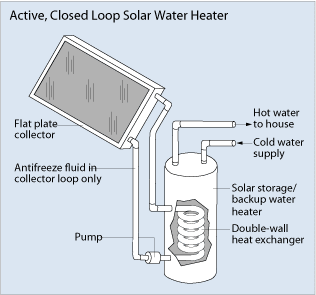
Solar water heating systems include storage tanks and solar collectors. There are two types of solar water heating systems: active, which have circulating pumps and controls, and passive, which don’t.

ACTIVE SOLAR WATER HEATING SYSTEMS

There are two types of active solar water heating systems:

  • Direct circulation systems
    Pumps circulate household water through the collectors and into the home. They work well in climates where it rarely freezes.
  • Indirect circulation systems
    Pumps circulate a non-freezing, heat-transfer fluid through the collectors and a heat exchanger. This heats the water that then flows into the home. They are popular in climates prone to freezing temperatures.

Illustration of an active, closed loop solar water heater. A large, flat panel called a flat plate collector is connected to a tank called a solar storage/backup water heater by two pipes. One of these pipes is runs through a cylindrical pump into the bottom of the tank, where it becomes a coil called a double-wall heat exchanger. This coil runs up through the tank and out again to the flat plate collector. Antifreeze fluid runs only through this collector loop. Two pipes run out the top of the water heater tank; one is a cold water supply into the tank, and the other sends hot water to the house.

PASSIVE SOLAR WATER HEATING SYSTEMS

Passive solar water heating systems are typically less expensive than active systems, but they’re usually not as efficient. However, passive systems can be more reliable and may last longer. There are two basic types of passive systems:

  • Integral collector-storage passive systems
    These work best in areas where temperatures rarely fall below freezing. They also work well in households with significant daytime and evening hot-water needs.
  • Thermosyphon systems
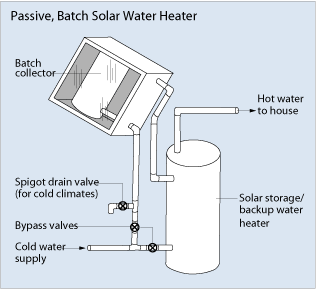
    Water flows through the system when warm water rises as cooler water sinks. The collector must be installed below the storage tank so that warm water will rise into the tank. These systems are reliable, but contractors must pay careful attention to the roof design because of the heavy storage tank. They are usually more expensive than integral collector-storage passive systems.

Illustration of a passive, batch solar water heater. Cold water enters a pipe and can either enter a solar storage/backup water heater tank or the batch collector, depending on which bypass valve is opened. If the valve to the batch collector is open, a vertical pipe (which also has a spigot drain valve for cold climates) carries the water up into the batch collector. The batch collector is a large box holding a tank and covered with a glaze that faces the sun. Water is heated in this tank, and another pipe takes the heated water from the batch collector into the solar storage/backup water heater, where it is then carried to the house.


STORAGE TANKS AND SOLAR COLLECTORS

Most solar water heaters require a well-insulated storage tank. Solar storage tanks have an additional outlet and inlet connected to and from the collector. In two-tank systems, the solar water heater preheats water before it enters the conventional water heater. In one-tank systems, the back-up heater is combined with the solar storage in one tank.

Three types of solar collectors are used for residential applications:

  • Flat-plate collector
    Glazed flat-plate collectors are insulated, weatherproofed boxes that contain a dark absorber plate under one or more glass or plastic (polymer) covers. Unglazed flat-plate collectors — typically used for solar pool heating — have a dark absorber plate, made of metal or polymer, without a cover or enclosure.
  • Integral collector-storage systems
    Also known as ICS or batch systems, they feature one or more black tanks or tubes in an insulated, glazed box. Cold water first passes through the solar collector, which preheats the water. The water then continues on to the conventional backup water heater, providing a reliable source of hot water. They should be installed only in mild-freeze climates because the outdoor pipes could freeze in severe, cold weather.
  • Evacuated-tube solar collectors
    They feature parallel rows of transparent glass tubes. Each tube contains a glass outer tube and metal absorber tube attached to a fin. The fin’s coating absorbs solar energy but inhibits radiative heat loss. These collectors are used more frequently for U.S. commercial applications.

Solar water heating systems almost always require a backup system for cloudy days and times of increased demand. Conventional storage water heaters usually provide backup and may already be part of the solar system package. A backup system may also be part of the solar collector, such as rooftop tanks with thermosyphon systems. Since an integral-collector storage system already stores hot water in addition to collecting solar heat, it may be packaged with a tankless or demand-type water heater for backup.

SELECTING A SOLAR WATER HEATER

Before you purchase and install a solar water heating system, you want to do the following:

Also understand the various components needed for solar water heating systems, including the following:

INSTALLING AND MAINTAINING THE SYSTEM

The proper installation of solar water heaters depends on many factors. These factors include solar resource, climate, local building code requirements, and safety issues; therefore, it’s best to have a qualified solar thermal systems contractor install your system.

After installation, properly maintaining your system will keep it running smoothly. Passive systems don’t require much maintenance. For active systems, discuss the maintenance requirements with your system provider, and consult the system’s owner’s manual. Plumbing and other conventional water heating components require the same maintenance as conventional systems. Glazing may need to be cleaned in dry climates where rainwater doesn’t provide a natural rinse.

Regular maintenance on simple systems can be as infrequent as every 3–5 years, preferably by a solar contractor. Systems with electrical components usually require a replacement part or two after 10 years. Learn more about solar water heating system maintenance and repair.

When screening potential contractors for installation and/or maintenance, ask the following questions:

  • Does your company have experience installing and maintaining solar water heating systems?
    Choose a company that has experience installing the type of system you want and servicing the applications you select.
  • How many years of experience does your company have with solar heating installation and maintenance?
    The more experience the better. Request a list of past customers who can provide references.
  • Is your company licensed or certified?
    Having a valid plumber’s and/or solar contractor’s license is required in some states. Contact your city and county for more information. Confirm licensing with your state’s contractor licensing board. The licensing board can also tell you about any complaints against state-licensed contractors.

IMPROVING ENERGY EFFICIENCY

After your water heater is properly installed and maintained, try some additional energy-saving strategies to help lower your water heating bills, especially if you require a back-up system. Some energy-saving devices and systems are more cost-effective to install with the water heater.

---------------------------------------------------------------------------------------------

Are you interested in a solar water system for your home or business?

IndianaDG has member companies who sell and install solar water or solar thermal systems. Contact us and we can provide contact information for these companies.

Copyright 2013 IndianaDG