

LIPA: How Solar Is Cutting Grid Costs

Posted by Laura Arnold  /   May 01, 2014  /   Posted in Feed-in Tariffs (FiT), Uncategorized  /   No Comments

How Solar Is Cutting Grid Costs

John Farrell 

April 29, 2014

With solar power, “we can avoid that $100 million investment in transmission lines, distribution lines, in capital infrastructure…”

That was Vice President of Environmental Affairs Michael Deering of the Long Island Power Authority in a remarkable podcast interview, explaining how local solar energy can help offset expensive grid upgrades for bringing in remote power generation, as much as $100 million worth.

Listen in to the podcast (recorded via Skype on 11/25/13) for the full story, or read the summary below for more on why one of the country's biggest municipal utilities is looking to solar to meet their growing energy demand.

Podcast (Local Energy Rules): Play in new window | Download | Embed


Energy to Power the Economy

A key focus for the Long Island utility was the economic and environmental benefits of solar, not just the power generation. Solar power did have significant grid benefits and it reduced costly pollution, but Deering emphasized how solar built on Long Island means jobs and economic development on Long Island.

Energy for Peak Needs

The Long Island Power Authority (LIPA) isn’t new to customer-owned solar.  They launched their first solar rebate program in 2001, and now have solar on over 7,300 homes and businesses on Long Island.  They’ve added another 50 megawatts (MW) with a few utility-scale projects, and then launched a feed-in tariff program encouraging commercial-scale solar (50 to 500 kilowatts) in 2012.  In total, the utility will have 170 MW of solar installed by the end of 2014, sufficient to meet about 3% of its peak demand.

Local Energy with High Value

LIPA isn’t a typical municipal utility.  It’s literally at the “end of the line” of the power grid and its limited capacity to import power puts a premium on locally generated energy.  The new iteration of the utility's feed-in tariff program, launched in 2013, asks for 40 percent of the power to be developed on the south fork of Long Island (Montauk).  If it works as planned, the utility will pay an additional 7¢ per kilowatt-hour for energy from those solar projects, using that prime-time energy to defer big investments in new transmission power lines and power plants.

What’s Next for Long Island power?

LIPA has plans to procure more large-scale renewable energy through a 280-MW request for proposal in 2014 as well as a third, 20-MW iteration of its popular feed-in tariff program — this time focused on non-solar renewable energy technologies.

You can learn more about feed-in tariff programs from ILSR's 2012 report or about the way utilities are valuing solar power from ILSR's recently released report on Minnesota's Value of Solar policy or blog series on Minnesota’s value of solar law.
Superfund Webinar April 29 will feature Maywood Solar Farm on Reilly Tar & Chemical Co. Superfund Site in Indianapolis

Posted by Laura Arnold  /   April 27, 2014  /   Posted in IPL Rate REP, Uncategorized  /   No Comments

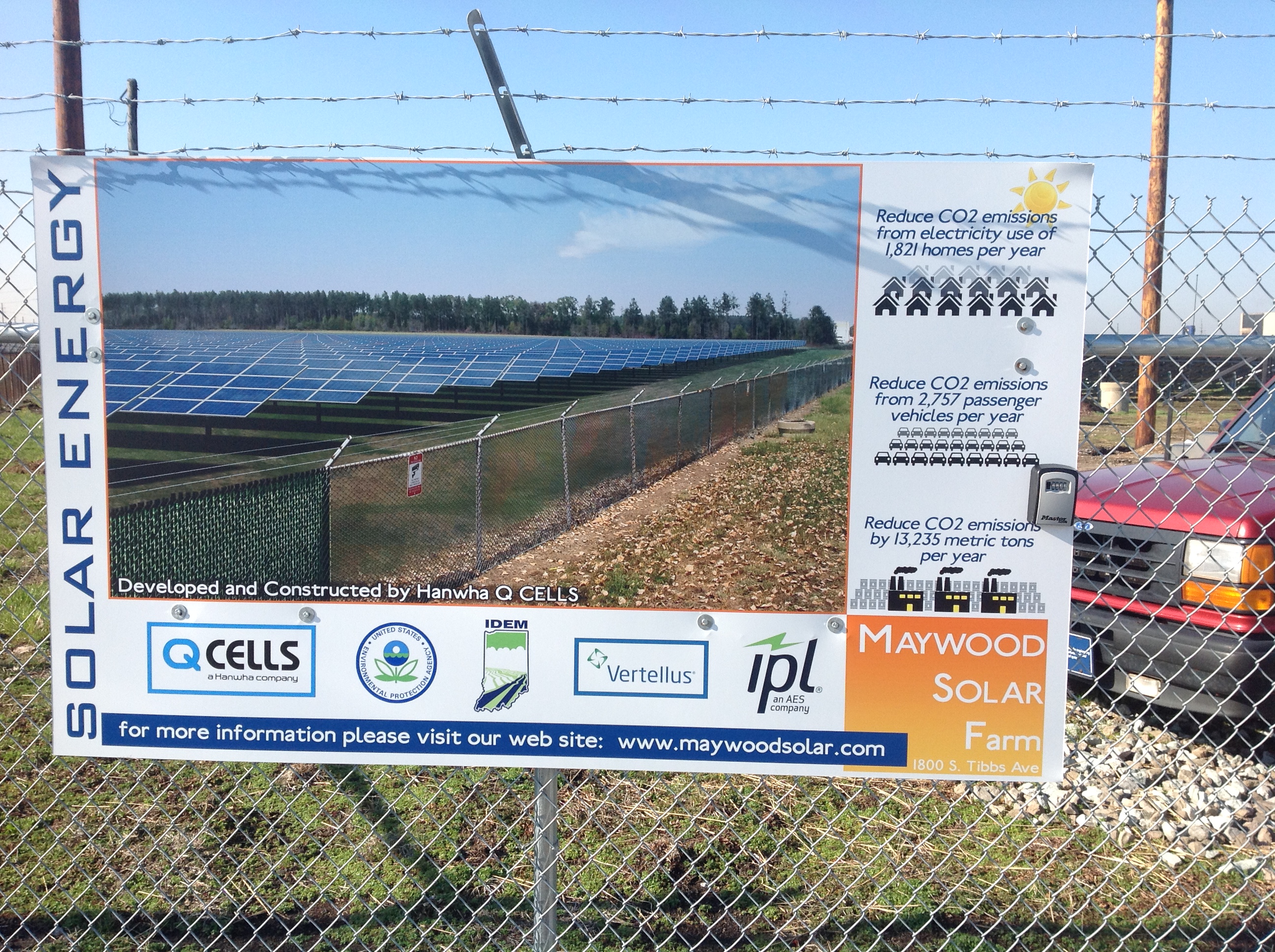
Maywood Solar Farm Sign (1)

I recently received this message and wanted to share it with IndianaDG Readers. I attended the recent ribbon-cutting ceremony for this project.

I'm a contractor for EPA's Superfund Redevelopment Initiative and I wanted to let you know that SRI will be hosting a webinar about renewable energy projects on Superfund sites on April 29. A major portion of the webinar will consist of an in-depth discussion about development of the new Maywood Solar Farm, located on the Reilly Tar & Chemical Co. (Indianapolis Plant) Superfund site.

I wanted to let you know the webinar is coming up and also ask if it might be possible to share the webinar announcement in the upcoming events on your website?

The webinar link is here:

http://www.epa.gov/superfund/programs/recycle/pdf/2014-apr-webinar

Please let me know if you have any questions..pdf

many thanks!

Sabrina

SUPERFUND AND RENEWABLE ENERGY:
PROMISING FUTURES FOR SITES WITH A
CONTAMINATED PAST
EPA has placed national priority on showcasing opportunities for the
development of clean and renewable energy projects on contaminated
lands. EPA’s Superfund Redevelopment Initiative (SRI) supports the use of
renewable energy at Superfund sites and has actively provided site owners
and local communities with technical support and resources to explore
innovative reuse opportunities available at these sites. Highlighting SRI’s
support activities as well as case studies from sites with solar projects in
place and generating electricity, this webinar will highlight how EPA worked
with site stakeholders and solar developers to design and enable renewable
energy project fully compatible with long-term protectiveness of a site. It will
also focus on the challenges and benefits found in developing a large solar
facility on formerly contaminated sites (e.g., landfills) and highlight the role
of these sites in supporting development and how local communities and
site owners can see economic and environmental impacts from renewable
energy development on current and formerly contaminated lands.

PRESENTERS:
Melissa Friedland, U.S. EPA Superfund Redevelopment Initiative
Frank Avvisato, U.S. EPA Superfund Redevelopment Initiative
Dion Novak, U.S.EPA, Region 5
Geoffrey Underwood, Hanwha Q Cells, Maywood Solar Farm
Matt McCullough, Hanwha Q Cells, Maywood Solar Farm

For additional information and to register, visit:
http://www.cluin.org/sri/

COST: FREE

FOR MORE INFORMATION, PLEASE CONTACT:
Melissa Friedland at friedland.melissa@epa.gov or (703) 603.8864,
Frank Avvisato at avvisato.frank@epa.gov or (703) 603.8949.
Superfund Redevelopment Initiative www.epa.gov/superfund/programs/recycle

WHEN: TUESDAY, APRIL 29, 2014
1:00PM TO 3:00PM (EDT)

Maywood Solar Farm Ribbon Cutting_2014-04-09


2014 Summer Reliability Presentations by Indiana electric utilities to IURC on April 29-30; Watch on-line

Posted by Laura Arnold  /   April 24, 2014  /   Posted in Indiana Michigan Power Company (I&M), Northern Indiana Public Service Company (NIPSCO), Uncategorized  /   No Comments

Agenda

2014 Summer Reliability Presentations


HOST:                Indiana Utility Regulatory Commission (IURC)

DATES:              April 29 & 30, 2014

To watch on-line: http://www.in.gov/iurc/2624.htm 

ISSUE:               Summer Preparedness Strategies and Future Challenges

SYNOPSIS:        The Summer Reliability Forum is an opportunity for the utilities to present on the following matters:

  1.  future operational challenges;
  2. energy growth and consumption; and
  3. steps taken to prepare for summer 2014 capacity and energy needs.

Tuesday, April 29, 2014


9:30 a.m.           Indianapolis Power and Light Company

                                    Kelly Huntington, President and CEO

10:15 a.m.          Hoosier Energy Rural Electric Cooperative

  • Mike Mooney, Manager of Corporate Planning
  • Mike Rampley, Senior Vice President, Marketing and Business Development

11:00 a.m.          Northern Indiana Public Service Company

  • Jim Stanley, NIPSCO CEO       

11:45 a.m.          Lunch

1:30 p.m.           PJM

  • Rich Mathias, Senior Consultant
  • Mike Bryson, Executive Director Systems Operations

2:15 p.m.           Indiana Municipal Power Agency

  • Raj Rao, President and CEO
  • Doug Buresh, Sr. Vice President, Planning and Operations 

Wednesday, April 30, 2014


9:30 a.m.           Midcontinent Independent System Operator

  • John R. Bear, CEO

10:15 a.m.          Indiana Michigan Power Company

  • Paul Chodak III, President and COO

11:00 a.m.          Southern Indiana Gas & Electric Company (Vectren)

  • Carl Chapman, Chairman, President and CEO

11:45 a.m.          Lunch (Extended for Commissioners and Staff to Attend Weekly Conference)

2:30 p.m.           Duke Energy Indiana

  • Doug Esamann, President, Duke Energy Indiana
  • Stan Pinegar, Vice President, Governmental Affairs –Indiana


3:15 p.m.           Wabash Valley Power Association

  • Lee Wilmes, Vice President of Power Supply
  • Greg Wagoner, Vice President Business Development


Indiana Governor Mike Pence Bill Signing Ceremony for HEA 1423 to encourage industrial CHP or Cogeneration > 80 MWs

Posted by Laura Arnold  /   April 24, 2014  /   Posted in 2014 Indiana General Assembly, Uncategorized  /   No Comments

P1180351


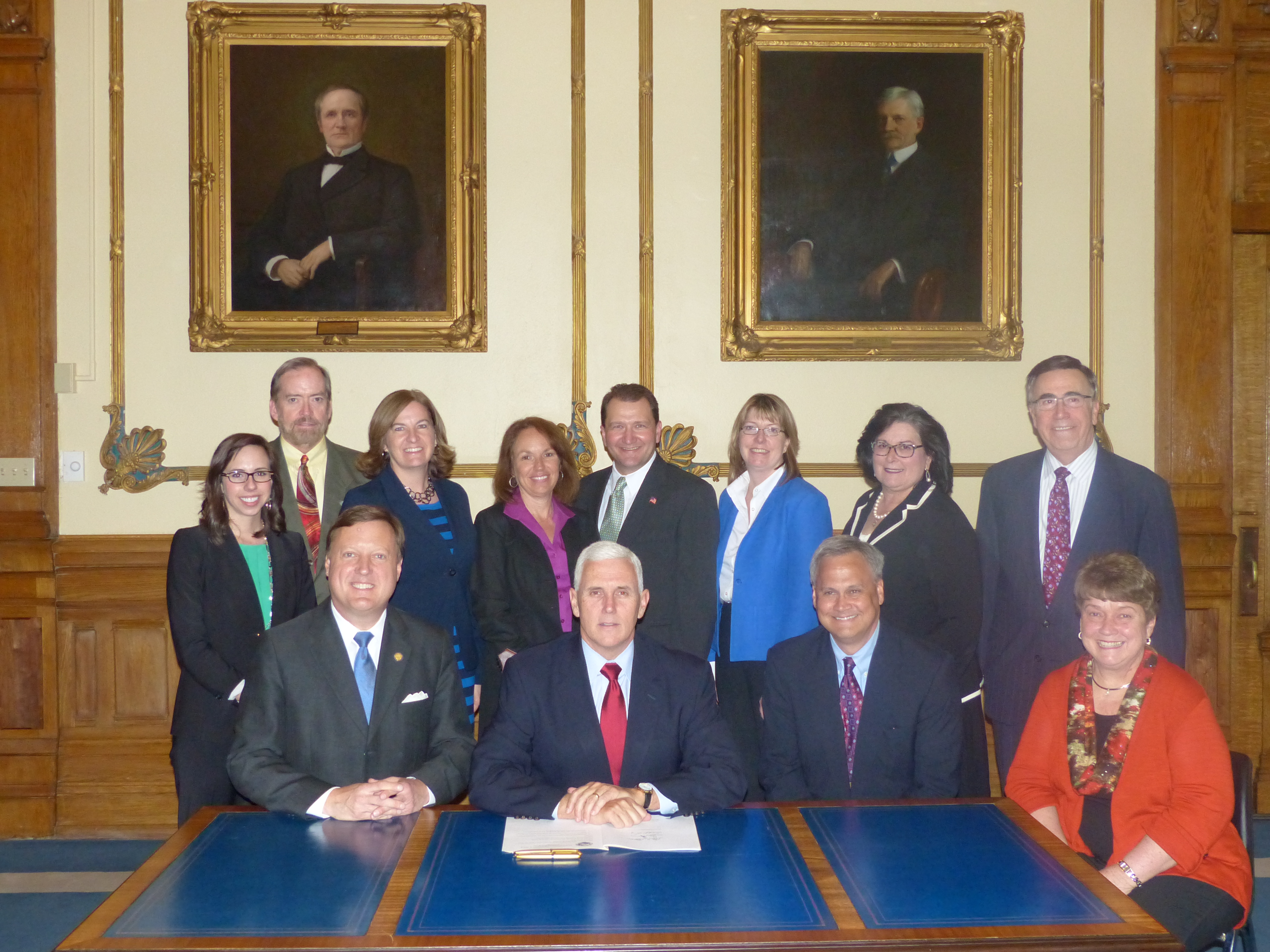
Seated (left to right): Rep. Eric Koch (R-Bedford), Governor Mike Pence Sen. Jim Merritt (R-Indianapolis), and Sen. Jean Leising (R-Oldenburg).

Standing (left to right): Danielle McGrath, Indiana Utility Regulatory Commission; Vince Griffin, Indiana Chamber of Commerce; Sally Rideout, Rideout Public Affairs; Miriam Dant, Dant Advocacy; Tim Rushenberg, Indiana Manufacturers Association; Jennifer Terry, Indiana Industrial Energy Consumers; Laura Ann Arnold, Indiana Distributed Energy Alliance; and Ed Simcox, Indiana Energy Association.

Download HEA 1423HB1423.05.ENRH

Xcel Energy sets stage for solar bidding war to meet Minnesota renewable energy law; Excel solar RFP is for 100 MWs

Posted by Laura Arnold  /   April 23, 2014  /   Posted in Uncategorized  /   No Comments

Xcel sets stage for solar bidding war

  • Article by: DAVID SHAFFER , Star Tribune
  • Updated: April 23, 2014 - 5:50 AM

Renewable energy companies will compete to build large, utility-size solar parks.

hide

Ground-based solar arrays like this one are expected to become commonplace.

Photo: BRUCE BISPING • Star Tribune,

Xcel Energy Inc. on Tuesday launched a bidding war among renewable energy companies to propose large-scale solar power projects to help the utility comply with Minnesota’s mandate for increased electricity from the sun.

Xcel said it plans to add 100 megawatts of solar power, about seven times more than the state’s current capacity from about 730 smaller, mostly rooftop arrays. Large solar projects, often called utility scale, usually are built on the ground, each covering an area the size of several football fields.

Under a 2013 state energy law, Xcel and two other Minnesota investor-owned utilities must get 1.5 percent of their power from solar by 2020.

One developer said he wouldn’t be surprised if Xcel gets pitched 100 projects from companies around the country in response to its request for proposals (RFP). Developers must offer projects that have a combined capacity of 5 megawatts or more, the request said.

“There are not a lot of big RFPs coming out,” said Dean Leischow, managing director of Sunrise Energy Ventures, a Minnetonka-based solar developer that has built large-scale projects in other states. “When there is one, and it’s a utility that’s good to work with like Xcel in an area where there is plenty of land available, it’s pretty attractive.”

Sunrise Energy is one of at least three Minnesota-based developers known to be interested in the competition. Others include Ecos Energy of Minneapolis, which built the state’s largest solar array last year in Slayton, and Geronimo Energy of Edina, which separately has won regulatory approval to build 20 solar parks in Xcel’s Minnesota territory.

Xcel’s solar additions announced Tuesday would be on top of the 100 megawatts that Geronimo plans to build for the utility. Xcel estimated that 100 megawatts of solar would generate power equivalent to the annual needs of about 20,000 homes.

“We would be delighted to build another project in our home state,” said Brad Wilson, a project developer at Ecos Energy, whose separate 20-site Go Solar project proposed in Minnesota has been on hold after being turned down for an Xcel renewable energy grant in January.

Seeking tax credit

Xcel wants the new projects built by the end of 2016, when a 30 percent federal investment tax credit for solar projects expires. Xcel set a tight deadline for submitting and reviewing proposals, with the goal of presenting solar deals to state regulators for approval this fall.

Leischow of Sunrise Energy said his company developed three large solar arrays for Indianapolis Power & Light in its home state. He said the projects, which went on line last year, came in at 9.9 cents per kilowatt hour. That’s about 2 cents less than Xcel’s residential electricity retail price in Minnesota.

Dave Sparby, CEO of Xcel’s Minnesota regional operations, said Xcel is “committed to providing solar power to customers in the most reliable, cost-effective way possible.” In Xcel’s recent solar deals in its Colorado service region, the utility has said the solar pricing was lower than that of power generated by natural gas.

Xcel said that at the end of 2013, it had 87 megawatts of large-scale solar in Colorado, and plans to add 170 megawatts there over two years. It has 50 megawatts in its Texas-New Mexico region, and Leischow said Sunrise Energy built 50 solar projects for the utility in New Mexico.

The Minneapolis-based utility has 12 megawatts of solar capacity overall for its 1.2 million Minnesota customers. Xcel has said it expects utility-scale projects to supply about two-thirds of the 1.5 percent Minnesota solar mandate, estimated at 270 to 300 megawatts. That is equivalent to the output of a moderate-sized power plant.

Xcel said it wants to purchase the power through long-term deals, with an Xcel affiliate possibly a partner. Xcel also reserved the right to purchase less than 100 megawatts in this round, and told developers to scale their projects with that in mind.

David Shaffer • 612-673-7090 Twitter: @ShafferStrib

Copyright 2013 IndianaDG