

Author Archives Laura Arnold

Richard Waterfield: SB 309 net loss for Hoosiers, progress

Posted by Laura Arnold  /   February 14, 2017  /   Posted in 2017 Indiana General Assembly, solar  /   No Comments

Richard D. Waterfield is the Managing Member of Waterfield Capital, LLC and former chairman of Waterfield Mortgage Company.

A net loss for Hoosiers, progress

Senate should reject bill to end solar energy metering

by Richard D. Waterfield

My family has been deeply invested in northeast Indiana for more than 100 years. We look with pride at the growing vibrancy of downtown Fort Wayne and the increasing interest in the rivers across our region. But our success depends not only on our making good local decisions but also on ensuring we have good state policy to advance our community’s growth. I’m troubled by state Senate Bill 309, which would seriously undermine long-term investment in customer-owned solar energy in Indiana.

I understand that solar energy jobs are growing at nearly 12 times the pace of the private sector. I am struck by the fact that one out of every 50 new jobs in the U.S. last year was in the solar energy field. It is encouraging, too, to see homegrown solar businesses emerge in our region, such as in Fort Wayne, Avilla and Huntington. SB 309 would send a very negative investment signal for solar energy by forcing an arbitrary reduction in the value that our electricity grid attributes to solar energy. This proposed policy would be at odds with practices in more than 40 states (including Indiana) called net metering. Net metering is a policy that ensures that the utility company recognizes the value that you bring to the electric grid by crediting you at the retail rate of electricity for the power that you feed to the grid.

By barring net metering for future solar owners, SB 309 could seriously discourage investment in solar energy for schools, office buildings, farms, churches, homes and warehouses. In a state that prides itself as being friendly to business, we are yanking the welcome mat for customer-owned solar energy, for which Indiana otherwise has an attractive labor and tax environment.

I especially care about SB 309 from the vantage point of a lifelong Fort Wayne resident. We have countless buildings that could be powered by pollution-free solar energy. There is the promise that IPFW, Ivy Tech, Indiana Tech, and University of Saint Francis graduates could, one day get jobs in installation, maintenance and production of solar panels – potentially right here in manufacturing-strong northeast Indiana.

I join a great number of businesspeople, faith leaders, public interest advocates, concerned citizens, solar homeowners and school superintendents across our state who are opposed to SB 309. I urge  and his leadership team to instead call on the Indiana Utility Regulatory Commission to do an independent study of the benefits and costs of solar energy to the grid. Let’s not rush a radical change in policy pertaining to solar energy. Future jobs and investment in our region are at stake.

Viewpoint: Hoosiers, you gotta fight for your right to net meter

Posted by Laura Arnold  /   February 14, 2017  /   Posted in 2017 Indiana General Assembly, solar, Uncategorized  /   No Comments

Viewpoint: Hoosiers, you gotta fight for your right to net meter

Viewpoint: Hoosiers, you gotta fight for your right to net meter

By Mike Keen and Timothy Powers; Feb 14, 2017

Did you know Indiana has experienced impressive growth in solar power recently? Hoosiers are cutting their electric bills, adding jobs and breathing cleaner air thanks to solar. Unfortunately, this could be changed by Senate Bill 309, heard by the Senate Utilities Committee last Thursday. Under the bill, producers of renewable energy will not be credited fairly for the energy their panels produce.

Solar installations for cities, schools, companies, places of worship, and homes currently total over 175 megawatts, or roughly 612.5 acres of sun-soaking crystalline silicon. That’s enough to power 18,000 homes! Barring a change to state and federal laws, this output is expected to triple in the next five years, producing the same amount of power as a small coal-fired plant. Indiana, a state better known for its basketball and corn, now boasts over 1,600 high-paying solar jobs that cannot be outsourced.

Indiana’s emergence onto the solar scene reflects national trends, where solar jobs outpace the national job growth rate by a factor of 12. In 2016, 1 in every 50 new U.S. jobs came from solar. Studies show 80 percent of the country supports renewable growth. Indiana is home to 82 solar companies that install residential, commercial and utility-scale projects across the state and around nation.

The benefits to solar are numerous. These panels can cut their owner’s electricity bill by more than half while reducing environmental impact. St. Anthony de Padua Catholic school here in South Bend, which sports a solar array on its gym, saves money it would much rather spend on students’ education while practicing environmental stewardship strongly encouraged by Pope Francis. Other notable local solar examples include the Century Center, Montessori Academy and the Transpo headquarters.

A variety of federal and state incentives help reduce solar system costs in the state. One of the most critical of these is net metering, the law granting people producing renewable energy the right to receive a credit for their extra power they return to the grid. Indiana and 41 other states currently allow their citizens to net meter.

Unfortunately, SB 309 threatens to significantly undermine this incentive. This bill is bad for Hoosiers on numerous levels. Anyone with solar would be prohibited from using the power produced by their panels. Instead, by 2027, and in some cases earlier, people would have to return their solar power to the grid for as little as 25 percent of the retail value, and then pay for the full price of all the power on their electricity bill.

Supporters of the bill claim this will make solar owners pay their fair share to support the costs of maintaining the grid. However, anyone who receives an electricity bill, no matter the size, will notice they already pay a transmission and distribution fee.

This is about so much more than the people with solar on their roofs. It is about modernizing Indiana’s power grid through distributed generation. Most states are doing this, including Michigan, Ohio and Illinois, all of which have recently overhauled their energy policy to support the rise in renewable energy.

A few states such as Nevada, which have passed bills similar to SB 309, have seen over a thousand solar jobs flee the state due to a subsequent downturn in the solar market.

It is not just solar this bill will hurt. Currently, 43 percent of Fortune 500 companies have pledged to make renewable energy a significant part, if not all, of their energy consumption by a certain date. General Motors plans to be 100 percent renewable by 2050, while Salesforce, with 800 employees in Indianapolis, has pledged to do the same. We will not attract more of these companies to Indiana if our energy policy makes it unfeasible to meet their energy goals.

If you own solar, are interested in one day owning solar, or simply want to see fellow Hoosiers breathing cleaner air, we encourage you to contact your state senator and later your state representatives about SB 309. It is critical we retain net metering in its current form. Let’s be a leader in renewable energy, not a straggler.

Mike Keen is the principal founder at Thrive Michiana LLC and professor emeritus at Indiana University South Bend. Timothy Powers is a graduate student at the Center for a Sustainable Future at IU South Bend.

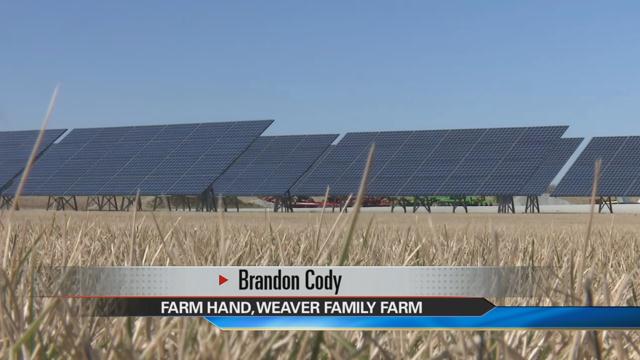
Solar energy for Hoosiers may change, costly impact for many

Posted by Laura Arnold  /   February 14, 2017  /   Posted in 2017 Indiana General Assembly, solar, Uncategorized  /   No Comments

Solar energy for Hoosiers may change, costly impact for many

NOTE: Click headline to view video story.

Posted: Feb 13, 2017 5:46 PM EST; Updated: Feb 13, 2017 7:39 PM EST

Commentary: Changes to Indiana’s solar policy misguided

Posted by Laura Arnold  /   February 13, 2017  /   Posted in 2017 Indiana General Assembly, solar  /   No Comments

Commentary: Changes to Indiana’s solar policy misguided

By Sanya Carley and David Konisky
Special to TheStatehouseFile.com
Sanya Carley is associate professor of Public and Environmental Affairs
at Indiana University.
David Konisky is associate professor of public and environmental affairs
at Indiana University.

Indiana Senate Bill 309, introduced by Sen. Brandt Herschman, proposes to fundamentally change Indiana’s solar energy policy. The proposed modifications to the state’s net energy metering program are based on a lack of evidence and faulty logic, and would severely undermine the future of solar power in the state. Indiana legislators should oppose this bill.

A net energy metering program allows a household to install its own solar—or other energy system—and connect this system to the electric grid. In times of excess solar generation, the household can sell its electricity back to the grid at the retail rate of electricity. During periods in which the household cannot cover its own electricity through the solar generation, it can purchase electricity from its standard electricity retail provider. This program is popular across the states, with more than 40 having a net metering program in place.

Senate Bill 309 proposes drastic changes. This bill would change the rate of reimbursement for solar generation from a retail rate to a wholesale rate. The difference between the two is, depending on location and other factors, roughly a multiple of two to three. This change would reduce people’s economic incentives to install solar. The bill also proposes to cap the net metering program to 1 percent of an electricity supplier’s most recent summer peak load, and eliminate net metering altogether in 2027. Collectively, these changes would unnecessarily stunt the development of this clean energy source.

Indiana is not the only state to consider modifications to its net energy metering policy. In 2016 alone, 28 states considered making changes. States took several other actions related to solar as well: 35 considered establishing additional fixed charges or raising the minimum electricity bill and 10 considered adding residential solar charges. These policy challenges are primarily leveled on the grounds that net energy metering customers do not pay the full fixed costs of electricity delivery and, as a result, other electricity customers cross-subsidize those with solar panels by picking up the extra fixed costs.

This argument, is flawed for three reasons:

  • There is no evidence that residential solar significantly raises the price of electricity;
  • Solar energy offers benefits beyond those that are typically accounted for in the price of electricity;
  • Regardless of which of these extra benefits are accounted for explicitly in the price of electricity, the vast majority of benefit-cost analyses conducted on residential solar have found benefits to exceed the costs, for both the solar owner and society at large.

A recent study written by Galen Barbose at the Lawrence Berkeley National Laboratory evaluates the effect of residential solar on retail electricity prices, both at present and under future scenarios with much higher levels of assumed solar penetration. The study finds that the effect is negligible: about 0.03 cents per kilowatt-hour at current solar penetration and between 0.1 and 0.2 cents per kilowatt-hour at higher assumed solar penetration levels in the future. These price impacts are much smaller than a variety of other possible electricity price change triggers such as natural gas price spikes or other policies intended to encourage clean energy development.

Solar power also offers many additional benefits, particularly for a state like Indiana that relies disproportionately on a single source of fossil fuel energy for electricity generation; about 75% of electricity in Indiana is generated from coal-fired power plants. Solar power is a clean, renewable source that does not result in emissions of pollutants that threaten human health. In addition, studies have shown that net metering programs create thousands of jobs. According to one recent estimate from the Solar Foundation, more than 200,000 people (nearly than 1,600 in Indiana) currently work in the solar industry. The net metering policy is especially important for Indiana, since the state lacks other common policy measures to encourage solar energy development.

Over the last several years, the majority of states have conducted solar valuation studies. These studies tend to include direct measures of costs and benefits associated with residential solar. Out of 16 recent solar valuation studies recently written or commissioned by utilities, utility commissions, or independent analysts, all found net positive benefits, and 12 of the 16 found net benefits that exceeded the retail rate of electricity. [emphasis added]

Indiana is on a slower path than most other states toward developing cleaner sources of energy. The General Assembly should be looking for ways to hasten the development of solar, wind, and other sources of renewable energy, rather than considering policies that impede the state’s transition to a cleaner energy future. Indiana Senate Bill 309 is clearly a step in the wrong direction.

Sanya Carley and David Konisky are professors of public and environmental affairs at Indiana University


This commentary was written about SB 309 as introduced and does not reflect the amendment which Sen. Hershman made in the Senate Utilities Committee on 2/9/17.


UPDATE: SB 500 to fix HOA solar problem amended today and moves to Third Reading in Senate

Posted by Laura Arnold  /   February 13, 2017  /   Posted in 2017 Indiana General Assembly, solar  /   No Comments

UPDATE: About 3:19 pm EST Sen. Aaron Freeman called down SB 500 on second reading. Sen. Freeman offered Amendment #2 and Amendment #3 which were both adopted by a VoiceVote.

SB 500 as amended today now moves to third reading or final passage in the Indiana Senate.


SB 500 introduced by Sen. Aaron Freeman (R-Indianapolis) to fix the Home Owner Association (HOA) solar problem in Indiana is on the Second Reading Calendar today (2/13/17).

To see the Senate Calendar visit:

http://iga.in.gov/legislative/2017/calendars/senate/18/

Click here to watch live streaming of the Senate:

http://iga.in.gov/legislative/2017/senate 

Three proposed amendment have been filed on SB 500.

Copyright 2013 IndianaDG