

Author Archives Laura Arnold

Opinion: Florida’s Amdt #1 defeat shows why solar won’t be stopped

Posted by Laura Arnold  /   November 20, 2016  /   Posted in solar, Uncategorized  /   No Comments

Florida's Amendment 1 defeat shows why solar won't be stopped, Trump or no Trump

David Pomerantz, executive director of the Energy and Policy Institute, wants utilities to 'co-thrive' with DERs

AUTHOR: David Pomerantz; PUBLISHED: Nov. 14, 2016

Americans who are concerned about climate change are shell-shocked over the election of Donald Trump, who has claimed climate change was a hoax created by China and promised to end federal support for clean energy, neuter the EPA, and kill the Paris agreement.

If Trump follows through on these threats, it will cause irreversible damage. But an election result buried by the chaos of Tuesday night offers a thin silver lining to the dark clouds gathering on the climate horizon: the surprise defeat of a deceptive ballot initiative in Florida called “Amendment 1.”

Florida’s investor-owned electric utilities – Duke Energy, Florida Power & Light (FPL), Gulf Power and Tampa Electric – spent $20 million pushing Amendment 1 and branding it as “pro-solar,” when in fact it would have undermined customer-owned solar power in Florida. Amendment 1’s passage would have paved the way for the utilities to add fees to solar customers’ bills and to cut net metering payments for the extra power they produce. They could have killed the nascent rooftop solar industry in Florida, which already lags behind far smaller states like Massachusetts and New Jersey.

Credit: Energy and Policy Institute

Amendment 1’s defeat offers a road map for how to keep the clean energy economy growing under a Trump presidency: turn to the states. During the George W. Bush years, wind and solar power grew rapidly, despite federal hostility, thanks to supportive policies in both red and blue states. That’s not surprising, as Americans across the political spectrum, then and now, overwhelmingly support clean energy. A President Trump can’t block that progress, but another obstacle can: electric utilities.

Utilities profit when they build more power plants and transmission lines, which they can only do if people buy more electricity. Distributed solar threatens that outdated business model by offering people the choice of making their own power, so utilities have waged war on rooftop solar, and Amendment 1 revealed their battle plan:

Instead, they advocate for “smart solar” and “solar done right” – code for large solar farms that utilities own, not customers. But it’s a ruse; Duke Energy told Florida regulators that it planned to generate a mere 2.2% of its power from solar energy in 2025, and FPL reports that it will be 1% solar in that year. Duke and FPL are instead investing heavily in gas, as are many other utilities.

Florida voters proved that they wouldn’t be fooled. The utilities’ “pro-solar” message crumbled after the Energy and Policy Institute and the Center for Media and Democracy released an audio recordingconfirming Amendment 1 was a “political jiu-jitsu” campaign designed to trick pro-solar voters. Once the truth was out, support cratered.

Second, utilities try to divide environmentalists from low-income advocates and communities of color, using front groups to argue that rooftop solar is only for the rich, who “shift the costs” to poor people. It’s more deception: a host of studies have shown that the benefits that rooftop solar customers provide to the wider grid outweigh the costs.

Low-income communities and communities of color are refusing to be pawns in the utilities’ game. Black and Latino leaders spoke out against Amendment 1, noting that they want policies that result in more solar for their communities, not less. The NAACP nationally has been a forceful advocate for rooftop solar power, and polls show that communities of color support clean energy at the highest rates of all Americans.

Last, utilities use their financial might to buy political power. In addition to the $20 million that Florida’s utilities spent backing Amendment 1, they spent another $9.3 million on campaign contributions to legislators this cycle. Utilities’ influence peddling will never go away, but the pro-solar movement is learning to counter it via grassroots organizing, as it did effectively in Florida.

If other utilities follow their Florida brethren’s game plan, they too will unite their opponents into broad movements against them, and politically sensitive regulators will take notice. FPL’s war on solar power is already having this effect. Regulators in Hawaii, rightfully skeptical of FPL’s record of blocking solar in Florida, rejected its parent company NextEra’s bid to buy Hawaii’s electric utility. In Texas, where NextEra wants to buy Oncor, regulators are expressing their own concerns.

Nevadans – many still outraged at NV Energy’s hostility toward rooftop solar in the net metering battle there – voted Tuesday to strip the utility of its monopoly status.

These results should send a loud alarm to utilities and their investors that every attack they launch at rooftop solar will boomerang to erode their customers’ trust and weaken their standing with regulators.

There is only one way out of the jam for utilities: they have to adapt their business models and find ways to co-thrive with distributed resources. Some are trying to do that, albeit at the behest of regulators, but most seem intent on wasting time fighting a war they are destined to lose. Customers are demanding solar, the market forces behind solar cannot be stopped, and a Trump presidency will not change those facts.


David Pomerantz is the executive director of the Energy and Policy Institute.

Prior to joining EPI, David spent eight years working with Greenpeace to move the electric sector away from fossil fuel and towards renewable energy. As a senior climate and energy campaigner, David coordinated Greenpeace’s “Click Clean” campaign for a greener internet. The campaign resulted in major internet technology companies, including Apple and Amazon, committing to power their data centers with 100% renewable energy. The campaign catalyzed hundreds of megawatts of new renewable energy development, and helped to defend and expand renewable energy policies and investment in the United States and abroad. David also led the development of Greenpeace’s strategy to push utilities toward renewable energy in Iowa, Nevada, North Carolina and Virginia.

In addition, David designed and implemented the communications strategy for Greenpeace’s work on electricity, leading to media coverage in Bloomberg Businessweek, The Los Angeles Times, The New York Times, USA Today, The Wall Street Journal, The Washington Post and Wired Magazine. He also helped to build Greenpeace’s field presence on coal-related issues in 2010 and 2011 and worked with communities in Ohio and New England in 2008 and 2009 to push members of Congress to support climate change and toxic chemical legislation. He previously worked as a reporter for newspapers in Boston and New York City.

David graduated Summa Cum Laude with a degree in History from Tufts University. A transplanted New Yorker, he now lives in San Francisco.

Massive Illinois energy bill divides clean energy groups

Posted by Laura Arnold  /   November 17, 2016  /   Posted in Uncategorized  /   No Comments

The Illinois Capitol Building in Springfield.

Massive Illinois energy bill divides clean energy groups

Members of the Clean Jobs Coalition who have negotiated together for many months over a massive Illinois energy bill have broken ranks after the bill’s introduction Tuesday, with some still supporting the bill, some opposing it, some hoping for pieces to be spun off and others remaining silent.

The schism within the coalition comes largely over the bill’s inclusion of demand charge rates — which are ardently opposed by solar developers and consumer groups — as well as over supports for coal plants that were introduced late in the game. Looming over the whole debate is also the subsidy for two nuclear plants pegged at up to $265 million a year.

The complex and vast mosaic of interests at play in the bill was showcased during a state House energy committee hearing that lasted for more than six hours Wednesday.

Renewable energy companies and environmental and community groups potentially have much to gain from the bill, as it “fixes” the state’s Renewable Portfolio Standard, significantly increases energy efficiency investments in northern Illinois and provides almost a billion dollars worth of programs for low-income consumers.

Exelon says two of its nuclear plants would close without the subsidy in the bill, and one is facing a mid-December deadline for starting closure. Chicago-based utility ComEd would secure major rate design changes without having to go through typical regulatory proceedings.

And in the latest addition to the bill — a Fixed Resource Adequacy Plan (FRAP) — Dynegy would get payments from the state allowing it to keep downstate coal plants open and possibly reopen one unit. The FRAP could also mean payments to one of the nuclear plants and to coal plants run by Ameren in neighboring Missouri.

Solar developers ardently support the RPS fix but fear the demand charge and an end to retail net metering in the bill would freeze their market in the state.

Both proponents and opponents of the bill say rates will rise if they don’t get their way. Numerous manufacturers, farmers, social justice advocates and residents weighed in on this front at Wednesday’s hearing, largely opposing the bill because of its impact on rates.

Critics put the bill’s cost at $24 billion and describe it as the largest rate increase in U.S. history.

‘@Exelon’s Senate Bill 2814 packages a wide variety of expensive programs that provide little benefit to IL consumers.’ – Illinois Attorney General’s Office

Illinois Attorney General Lisa Madigan has been a critic of the bill, and during the hearing her office tweeted: “@Exelon’s Senate Bill 2814 packages a wide variety of expensive programs that provide little benefit to IL consumers.”

After the marathon hearing, the energy committee passed the bill to the House floor but said it must come back to the committee with amendments. The current veto session includes just four more days, ending the week after Thanksgiving.

Republican state Rep. C. D. Davidsmeyer said the bill became much bigger quicker than he expected, like having “a completely flat tire, another one running low and suddenly we’re buying a new vehicle.”

Environmental groups’ dilemma

Until recent months, environmental groups and renewable developers had been pushing their own Clean Jobs Bill as a counter to Exelon’s and ComEd’s proposals. But legislators had signaled that they would only pass an energy bill with unified support, so environmentalists spent months working to integrate the RPS fix and other provisions into the larger energy bill.

Some thought they had reached a reasonable compromise until the FRAP language was added to the draft bill.

“As recently as this past weekend, there was a historic agreement to finally fix the RPS and jump-start Illinois’ renewable energy industry, save all customers money through a nationally leading energy efficiency effort, and create tens of thousands of jobs throughout the state,” said Andrew Barbeau, a consultant for the Environmental Defense Fund. “That package was carefully negotiated over many months, down to the comma, and did not include any highly contentious handouts to Dynegy’s or Ameren’s fossil plants. This new FRAP language is not agreed to by any party.”

Despite the FRAP addition, Wednesday morning the Natural Resources Defense Council, Sierra Club, Environmental Defense Fund, Faith in Place and the Citizens Utility Board spoke along with ComEd and Exelon executives in a tele-press conference touting the bill.

“I’m excited to announce we’ve reached what we view as a historic agreement with ComEd and Exelon … around how Illinois is going to seize the benefits of the clean energy economy going forward,” said Sierra Club Illinois director Jack Darin. 

But, he added, “From the Sierra Club and environmental community we’ve got real concerns about the proposal for ratepayer supports for fossil fuels … . There are some parts of the bill that are not part of our core agreement… . We’re excited that hopefully this bill is going to move forward, and as it moves through the legislative process those areas will be addressed.”

David Kolata, executive director of the Citizens Utility Board, said he also has “concerns” about the FRAP and about low energy-efficiency targets for downstate utility Ameren Illinois. “We expect some tweaks and changes,” he said. “We’re optimistic it will move in a positive direction.”

Joe Dominguez, Exelon executive vice president for governmental and regulatory affairs and public policy, said he was also excited about the bill, which would bolster Exelon’s Clinton and Quad Cities nuclear plants by providing them “zero emissions credits” in a plan similar to one recently adopted in New York.

“Mostly we’re excited for customers in Illinois, for families who will get the benefit of cleaner air,” said Dominguez. “I think of this in the context of nuclear workers who have gone to Thanksgiving dinner and holiday celebrations for the last few years under a cloud, not knowing if their jobs will continue to exist … this bill removes that cloud.”

Juliana Pino, policy director of the Little Village Environmental Justice Organization, was at the table drafting the bill. She said her organization, which gained international attention for a decade-long battle to shut down local coal plants, would never agree to the FRAP.

“Giving a subsidy that would potentially increase rates for southern Illinois customers and extend a lifeline for coal plants is the opposite of what we should be doing,” she said. “That’s an environmental justice issue and that’s something we would never support.”

Demanding a FRAP

During the House committee hearing, Dynegy regulatory senior vice president Dean Ellis described why the company wants a FRAP, wherein the state Illinois Power Agency would pay for capacity, or the promise to be able to provide power if needed. Currently Dynegy’s downstate coal plants are paid for capacity through auctions run by the Midcontinent Independent System Operator (MISO).

Those payments can fluctuate from $3 to $100 a unit, Ellis said, making it hard for the company to make financial predictions and investments. Ellis described how the company has made various attempts to secure higher and more consistent payments for capacity, including through a failed attempt to join the PJM Interconnection, which runs its own capacity auctions with higher prices.

Exelon’s Clinton nuclear plant could also benefit from the FRAP, and it is assumed Exelon has agreed to the FRAP to help gain political support for the entire bill from downstate legislators who see it as protecting the regional coal industry.

But during committee testimony Phil Gonet, president of the Illinois Coal Association, said the coal industry opposes the bill.

“There’s nothing in this for the Illinois coal industry,” Gonet said. “None of the Dynegy plants that are in this use Illinois coal … . Eighty-five percent of the coal we produce in this state goes out of state. The Illinois coal industry opposes the subsidy to Exelon.”

The FRAP is also being criticized for the amount it would add to bills for both residents and industrial customers.

Eric Robertson, an attorney for a consortium of Illinois industries, told the committee that its members will be harmed by higher electricity prices if the bill passes. He said the oil pipeline company Enbridge has expressed doubt over whether it would continue operations in Illinois under the bill. And higher prices could be disastrous for Illinois steel mills including in his town of Granite City.

“Steel is a very competitive market,” Robertson said, adding the bill would “endanger the continuation of the thousand jobs you have here.”

Wind on the Wires public policy manager Kevin Borgia noted that while wind power would theoretically be eligible for capacity payments, the FRAP would be unlikely to create incentives for renewable development and instead would “disrupt regional power markets and prop up troubled assets.”

“It starts to move away from the fair and open market rules,” he said. “It represents Illinois trying to secede from that fair and open market that has worked so well for consumers.”

Demand charge outrage

Fidel Marquez, ComEd senior vice president, legislative and external affairs and chief governmental and community relations officer, said the utility has responded to concerns about the demand charge by revising the proposal.

Demand charges base a customer’s bill in large part on their highest spikes in electricity usage rather than total use. The latest proposal would charge users for their average highest half hour of use each day over a month, as opposed to their single highest monthly spike as originally proposed.

Marquez called that “eliminating the so-called gotcha problem,” when customers are charged for isolated spikes of use.

But the change has not won over critics.

A few hours after the tele-press conference with ComEd and Exelon, members of the Clean Jobs Coalition who had not been there released their own list of statements opposing the demand charge.

‘The electric utility is something you’re stuck with, you have to pay what they charge you.’

The AARP, Illinois PIRG, the environmental justice group Blacks in Green, Wind on the Wires and The Alliance for Solar Choice argued that the charge would mean rate increases especially for low-income and elderly people, and that it would make it impossible for people to calculate the finances of installing rooftop solar.

“We’re asking the legislators to think about their constituents — especially those on fixed and lower incomes,” said AARP manager of advocacy and outreach Ryan Gruenenfelder. “They should not be punished in order to cater to this extremely profitable conglomerate called Exelon and Commonwealth Edison who have the ability to meet constituent needs at reasonable rates. It’s not like food and clothing where you have a multitude of options to purchase what you need. The electric utility is something you’re stuck with, you have to pay what they charge you.”

Pino said that environmental justice advocates strongly support some parts of the bill, including the incentives for hiring ex-offenders and foster care alumni for renewable energy jobs. But if the demand charge and revocation of net metering kill the solar market, she noted, those incentives become irrelevant.

“We’re weighing positives and negatives here,” she said. “The positives are great, but they can’t only be on paper. To be realized, the whole package needs to balance against itself. We need to see some changes before this is something we could argue for.”

Cypress Creek Renewables now 2nd biggest developer behind First Solar

Posted by Laura Arnold  /   November 17, 2016  /   Posted in solar, Uncategorized  /   No Comments

Utility-Scale Solar M&A Activity Picks Up as US Developers Scramble to Build Bigger Pipelines

Photo Credit: Cypress Creek Renewables

Utility-Scale Solar M&A Activity Picks Up as US Developers Scramble to Build Bigger Pipelines

Cypress Creek Renewables is now the second-biggest developer behind First Solar. Its recent acquisition of FLS Energy is a sign of a looming trend.

One of America’s largest utility-scale solar developers just got bigger.

Last week, Cypress Creek Renewables announced that it had signed an agreement to acquire North Carolina-based solar developer FLS Energy. The combined company will boast an impressive pipeline of solar projects.

According to the companies, FLS Energy has an operating portfolio of 350 megawatts and a “near-term pipeline” of over 600 megawatts. This will add to Cypress Creek’s own solar portfolio of 735 megawatts that are either in operation or under construction, and 4 gigawatts in various stages of planning.

“This move solidifies its place as a major developer of utility-scale solar in the U.S.,” said Colin Smith, a solar analyst at GTM Research.

Cypress Creek is now the second-largest utility-scale solar developer in America, behind only First Solar, according to Smith.

For its part, Cypress Creek believes the acquisition of FLS will make it stronger in both project finance and construction -- and better poised to take advantage of new growth opportunities.

“We are active in 15 states. FLS will help us grow in those markets, as well as other states in the coming months and years,” said Jeff McKay, a company spokesperson. “We can’t say what those states will be, but we are actively trying to grow.”

Expect more mergers and acquisitions

Cypress Creek’s acquisition of FLS Energy comes at an interesting time for utility-scale solar in the U.S. Although its projections have not yet been finalized, GTM Research expects that 9.9 gigawatts of new projects will come on-line in 2016, double the amount added in 2015.

This year could have seen even more utility-scale solar installed if the 30 percent Investment Tax Credit (ITC) had not been extended through 2018, when it is slated to ramp down incrementally through 2021 and remain permanently at 10 percent starting in 2022.

“Because utilities were expecting to have the ITC fall off in 2016, they over-procured to meet their obligations,” said Smith. When the ITC was extended, some of the projects that were slated to come on-line in 2016 were pushed to 2017.

Smith says the Cypress Creek deal is notable for a couple of important reasons.

In particular, the rush by utilities to procure large solar projects before the end of 2016 ultimately reduced RPS solicitations for coming years, and forced developers to scramble to fill up a dwindling project pipeline.

Smith expects to see an increase in merger and acquisition (M&A) activity as more developers seek to build their pipeline by ingesting entire companies. “We think it’s the beginning of a trend of companies that want to buy other companies to get their pipeline,” he said.

It also could mark a fundamental shift in the driving force behind utility-scale solar development. “Renewable portfolio standards were behind utility-scale PV in the U.S. [Cypress] is an example of a company that has leveraged non-RPS mechanisms to become the No. 2 developer in the country in terms of pipeline,” said Smith.

Moving beyond the RPS

The way Smith sees it, new drivers of utility-scale solar include voluntary utility and corporate procurement by companies that realize solar is competitive with natural gas and a good hedge against rising fuel prices. Additionally, the ongoing decline of solar prices has made it possible for more and more projects to be economically viable under the Public Utility Regulatory Policies Act (PURPA).

Passed in the 1970s, PURPA was meant to encourage energy conservation and renewable energy development by allowing developers to sell the energy they produced to utilities, as long as it was at a price equal to or below avoided cost. “With the cost of renewables dropping, solar plants can be cheaper than avoided costs,” said Smith. PURPA has prompted solar development in states like North and South Carolina, as well as Indiana and Oregon.

Though there’s no cap on PURPA projects, it is an inherently risky approach. When utilities see they have too much power in their interconnection queues, said Smith, they petition state regulators to change avoided-cost rates, lower contract lengths, or reduce the maximum project size. “It’s very risky in the sense that you can have abrupt policy shifts." Montana has recently experienced just such a pushback.

Despite the risks, Smith expects PURPA-driven projects will meaningfully contribute to the 2017 utility-scale solar market. As RPS procurements wane, a combination of voluntary purchases by corporations and utilities, as well as solar’s increasing competitiveness in wholesale energy markets, will take up some of the slack.

It’s also possible that local governments -- like Marin County in Northern California -- will ramp up their energy procurement and become a larger driver of utility-scale solar development.

GTM Research’s latest projection for 2017 utility-scale solar installations is 8.7 gigawatts, although 2.5 gigawatts of that total consists of projects initially slated for completion in 2016. “There’s an inevitable decline, because there was so much over-procurement in 2016,” said Smith.

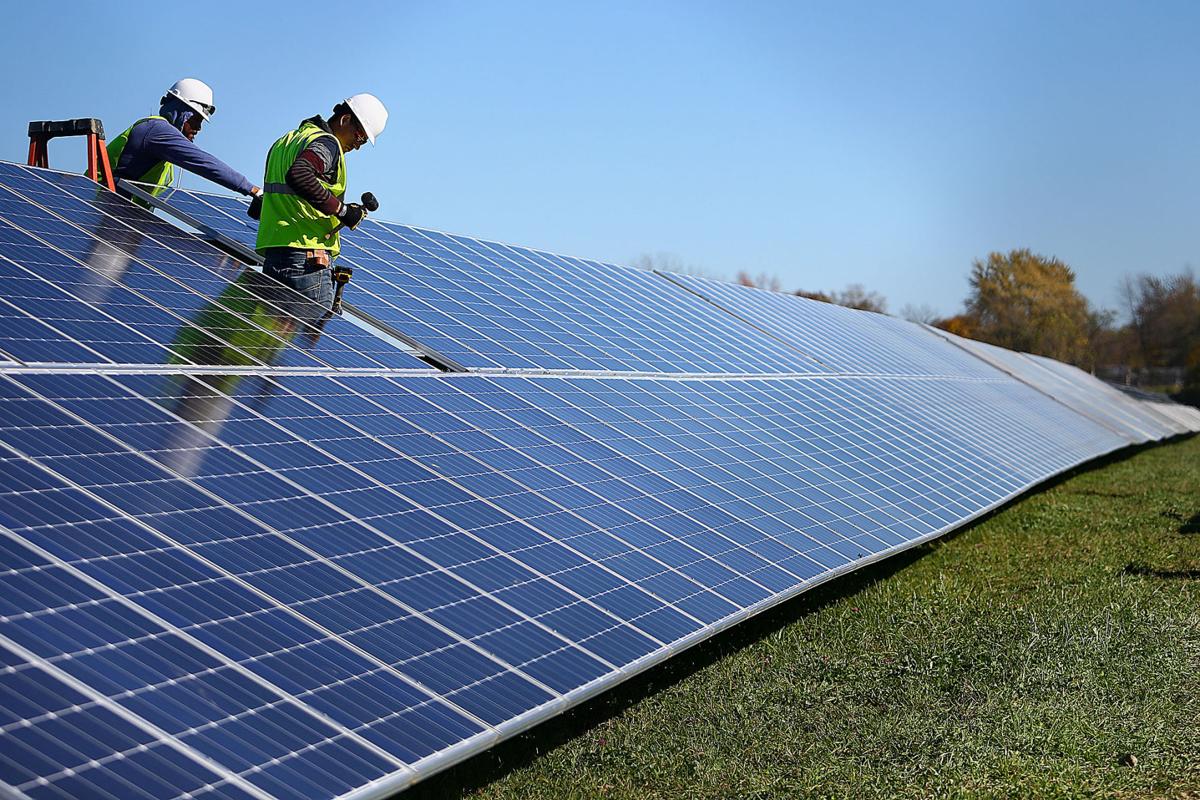
Kokomo solar park to be operational in early December

Posted by Laura Arnold  /   November 16, 2016  /   Posted in Uncategorized  /   No Comments

Solar Farm

Kokomo solar park to be operational in early December

By George Myers

KOKOMO - The finish line is in sight for Kokomo’s new solar park.

The park, located at the former Continental Steel plant site, is likely to be operational in the first part of next month and will include 21,000 solar panels producing 7 megawatts of energy, according to Austin Williams, an Inovateus Solar senior account executive.

The solar park is being developed by Inovateus Solar, a solar-integration company based in South Bend that has developed solar-energy facilities in 26 states.

In an interview Monday, Williams said the park, which will encompass roughly 26 acres at 1201 W. Markland Ave., is expected to begin producing energy in December to be sent to Duke Energy.

The Indiana Utility Regulatory Commission approved a 20-year purchased-power agreement last August between Inovateus Solar and Duke, which will buy the electricity and distribute it on the grid. Overall, the usage lines up between 500 to 1,000 homes, noted Williams.

“All the energy just goes directly to Duke’s distribution system,” he explained.

Duke Energy Indiana’s operations provide about 7,500 megawatts of owned electric capacity to approximately 810,000 customers in a 23,000-square-mile service area, making it the state’s largest electric supplier, according to a Duke press release.

From now until next month, Williams said various panels need to be placed and that electrical work, including wiring, needs to be completed in parts of the park.

After completion, Williams said the park will mostly operate on its own, requiring Inovateus employees to visit for observation and maintenance only a couple times each year. Instead, Inovateus will mostly stay in tune with the park through remote monitoring, he noted.

Following the Kokomo Plan Commission’s approval of the park in June, Williams explained Inovateus’ decision to build in Kokomo.

“We looked for areas where there was plenty of power draw, plenty of power load, and energy infrastructure,” he said. “With Kokomo as a high industrial area, that was top of the list to start checking out.

“When we started finding these brownfield sites it really made a lot of sense, and then the city got really excited because they’ve been vacant for a while. Kokomo is a good choice because it’s really got the population we need and the energy infrastructure,” he added later.

Formerly, the Continental Steel site was listed on the Environmental Protection Agency’s list of most dangerous sites because of the high levels of toxic pollutants in the soil.

Continental Steel went bankrupt in 1986, and studies revealed the 183-acre property was contaminated with solvents, PCBs and lead. The Indiana Department of Environmental Management and the EPA spent more than $40 million to clean up the site.

City Engineer Carey Stranahan said in a previous interview Kokomo is on board with the new facility, which will revitalize a piece of property that has been vacant for decades.

The city and Inovateus recently finalized a 20-year lease for the property.

“The reason we were interested in turning this property into a renewable energy opportunity is because we can reuse property that previously compromised the environment,” he said. “Solar energy has a very low impact on the environment, which was attractive to us.

“This also reduces maintenance by the city. We will be receiving revenue, but we will not have to invest too many resources,” he said.

George Myers can be reached at 765-454-8585, by email at george.myers@kokomotribune.com or on Twitter @gpmyerskt.

Illinois energy bill imminent, with controversial coal supports included

Posted by Laura Arnold  /   November 15, 2016  /   Posted in Uncategorized  /   No Comments

Illinois legislators are expected as early as today to introduce a long-awaited massive energy bill that would provide subsidies to keep nuclear plants and coal plants running, along with fixing the state’s Renewable Portfolio Standard, increasing energy efficiency investments and other measures.

For more than a year, Exelon has been pushing a bill mandating ratepayer supports— now pegged at up to $265 million — for two nuclear plants that the company says would close otherwise.

This bill, dubbed the Future Energy Jobs Bill, is an attempted collaboration between Exelon and other generators, utilities ComEd and Ameren Illinois, and environmental groups and the solar industry.

Negotiations between these stakeholders have been going on for many months, but people familiar with the negotiations say that the most controversial provision, which would keep downstate coal plants running, was just added recently.

The proposed FRAP, or Fixed Resource Adequacy Plan, would put the state in charge of determining capacity prices paid to generators, most notably two downstate coal plants owned by Dynegy. Under the proposed bill, these prices would likely be significantly higher than the capacity prices that would otherwise be paid through auctions run by the Midcontinent Independent System Operator (MISO).

There has been controversy in recent years over costs that ratepayers foot for capacity — a generator’s promise to be available to provide a certain amount of electricity if needed. Dynegy had previously sought — unsuccessfully — to move from MISO to the PJM regional transmission organization which covers northern Illinois, and which typically pays much higher capacity prices. Dynegy and Exelon had also both proposed changes to how MISO’s capacity auctions are carried out.

Leaders of environmental groups, the solar industry and other clean energy interests have reached compromises on a number of the contentious issues in the proposed bill, people familiar with the negotiations say. But they say that a provision to keep coal plants open could be a deal-breaker for environmental groups.

Meanwhile clean energy stakeholders are eager to pass an energy bill that includes the fix to the state’s Renewable Portfolio Standard (RPS), an arcane but crucial change in the structure of the policy that advocates say is necessary to spark new solar and wind construction in the state.

Previously, environmental and solar groups and businesses were backing a proposed Clean Jobs Bill which included the RPS fix. Exelon had previously introduced its own bill with nuclear supports while ComEd backed its own bill proposing new rate structures, microgrids and other provisions. ComEd and Exelon, its parent company, later merged their bills into one, called the Next Generation Energy Plan, in the spring.

A demand charge outlined in the Next Generation Energy Plan has been highly controversial among solar groups and consumer advocates, who say it would raise bills on some customers unfairly and chill the solar market. Changes to the demand charge proposal have reportedly been made during negotiations.

Provisions in the bill that could open windows for utilities to own some generation, in a state where that has been banned since deregulation, have also raised concerns. 

Illinois’ legislative veto session runs this week for three days and then for three days the week after Thanksgiving. The state has still not passed a 2016 budget, as the Republican governor and Democratic legislature have been in a standoff. Passing a sprawling energy bill in the veto session may seem a long shot. 

Though the bill still has not been introduced, Exelon has posted a website plugging the Future Energy Jobs Bill and asking residents to contact their legislators in support. The website touts doubled energy efficiency investments, a proposed measure that has pleased environmental leaders. The website also promises the creation of 4,200 jobs and a $1 billion commitment to programs for low-income customers.


>>>Here is  a link to SB 2814, filed this morning (11/15/16)  http://www.ilga.gov/legislation/99/SB/PDF/09900SB2814ham002.pdf

IndianaDG understands a hearing on this bill is expected to be scheduled for tomorrow (11/16/16).


Copyright 2013 IndianaDG