


Gov. Pence finishes extreme makeover of Ind. efficiency rules; The real story behind SEA 412

Posted by Laura Arnold  /   April 13, 2015  /   Posted in 2015 Indiana General Assembly, Office of Utility Consumer Counselor (OUCC)  /   No Comments

 Dan Schmidt, Pence's policy director for energy and environment
 

 Gov. Pence finishes extreme makeover of Ind. efficiency rules

Jeffrey Tomich, E&E reporter

Published: Monday, April 13, 2015

Buried in 31 pages of technical comments filed in response to U.S. EPA's Clean Power Plan, Indiana officials declared that the state lacks legal authority to require energy efficiency programs that could help reduce emissions of greenhouse gases from coal-fired power plants.

What the Dec. 1 comments from state agency leaders didn't mention was that their boss, Gov. Mike Pence (R), is the one who effectively pulled the plug on Indiana's energy efficiency standard months earlier, undoing the work of his predecessor, fellow Republican Mitch Daniels.

Four months later, Pence has waiting on his desk a "replacement" efficiency bill, S.B. 412, that he proposed in January and that emerged from the Republican-dominated Legislature with few changes.

The utility-backed bill, sponsored by Sen. Jim Merritt (R), fundamentally alters how energy efficiency programs are implemented in Indiana. Supporters say the changes ensure cost effectiveness of efficiency programs and provides flexibility. Critics say the measure further undermines efforts to curb energy use and could ultimately shape how the state responds to EPA’s final Clean Power Plan rule.

"It's a way to price efficiency out of the marketplace," said Kerwin Olson, executive director of Citizens Action Coalition, an Indianapolis-based consumer and environmental advocacy group. "Energy efficiency is going to get priced out of the portfolio."

Gone is the requirement that utilities across the state reduce energy demand 2 percent by 2019 and "core" programs that utilities were required to offer. S.B. 412 relies on electric service providers to propose their own programs, budgets and goals subject to regulatory approval.

Specifically, utilities must include energy efficiency in their integrated resource plans -- nonbinding, long-range planning documents filed with the Indiana Utility Regulatory Commission every three years starting in 2017.

It will then be up to the commission to approve or disapprove efficiency programs proposed by utilities, including the amount they spend to help customers cut energy use and goals for energy savings.

The bill specifically authorizes utilities to recover program costs, including lost revenues -- a nuanced and complex issue that became a flashpoint during the legislative debate.

Lost revenue recovery is a key focus for utilities when it comes to energy efficiency programs. That's because many utilities recover a portion of fixed costs through volumetric energy charges, especially when it comes to residential and small commercial customers. So as kilowatt-hour sales start to decline, it can lead to underrecovery of revenue needed to maintain the grid, companies say.

So, to align the interests of utilities and consumers, companies create a mechanism to recover those lost revenues as energy use declines.

Dan Schmidt, Pence's policy director for energy and environment, said in an interview that the governor is pleased with the bill that emerged last week and said it provides the state more flexibility to implement efficiency programs depending on constantly changing energy markets, environmental regulations and other dynamics.

Mark Maassel, executive director of the Indiana Energy Association, said SB 412 leaves it up to the five-member IURC to decide through the integrated resource planning process what resource — efficiency, renewables, fossil generation — is the best solution for meeting future energy demand. Programs are also subject to independent evaluation, measurement and verification.

“It will be more cost-effective and not just effective in reducing kilowatt-hour consumption,” Maassel said.

Backers of the bill pointed to a report commissioned by the state that showed cumulative efficiency program costs under the Energizing Indiana program would have more than doubled to $549 million from $200 million by 2019, or to an average of $3.99 a month for residential customers from $2.87. Rising costs, they said, were proof that the low-hanging fruit had been harvested and reducing energy use would become increasingly expensive under the "one size fits all" program.

Lost in the discussion was the next paragraph in the same report. Even with the rising costs, the programs were expected to continue to produce net benefits for consumers over the same time horizon.

Opponents of the bill point out that it was the utility commission that directed Daniels in 2009 to establish the state's energy efficiency standard because utilities were doing very little to encourage energy savings. The requirement led to the Energizing Indiana program that was dissolved when Pence chose not to veto S.B. 340 last spring (EnergyWire, March 31, 2014).

What's more, Olson and other critics say the language in S.B. 412 is purposely vague to allow utilities to recover lost revenues over the life of an energy efficiency measure. For a CFL bulb, that "lifetime" might mean five years. For attic insulation or a new pump or motor, the lifetime can be two decades or longer, during which utilities are able to recoup lost revenues.

In sum, lost revenues can add up to tens of millions of dollars for utilities.

"It can be a very lucrative situation for utilities," said Martin Kushler, a senior fellow at the American Council for an Energy-Efficient Economy, a Washington, D.C.-based advocacy group.

Kushler said ACEEE favors rate decoupling -- or separating utility revenue from the volume of kilowatt-hour sales -- over a lost revenue adjustment mechanism such as the one in S.B. 412.

The reason: With decoupling, any revenue overcollection flows back to customers. With lost revenue mechanisms, such as those allowed under S.B. 412, utilities can continue to "double collect" until the next rate case.

In Indiana, investor-owned utilities aren't required by law to file rate cases on a regular basis. Some utilities can wait seven years between rate cases, while others have no such requirement.

The efficiency debate in Indiana is rooted in helping reduce energy costs for Hoosiers. Retail electricity prices in the state, where coal generates 85 percent of electricity, have risen steadily in recent years.

But it's not just a pocketbook issue. Energy efficiency is also expected to play a key role in helping the state meet its CO2 reduction goal under the Clean Power Plan.

But as state officials point out in their reply comments to EPA, the Clean Power Plan is based on data from 2012, when Indiana had an energy efficiency resource standard in place. That's no longer the case.

Pence, who took to a ballroom at the Indianapolis Hyatt last spring on the day the Clean Power Plan was released and vowed to "use every means at our disposal" to fight the rule, has remained a vocal critic. But Indiana hasn't indicated how it will seek to comply if the rule withstands legal challenges or how big of a role energy efficiency will play.

"We didn't design SB 412 with 111(d) specifically in mind," Schmidt said. "It was not the driving force."

Schmidt said he didn't want to speculate whether Indiana's CO2 emissions goal would be changed in EPA's final rule because of the change in state policy.

Jodi Perras of the Indiana Chapter of the Sierra Club said that, while the state has challenged federal environmental regulations in the past, it has ultimately chosen to develop its own implementation plans.

"I would think that the utilities would rather have Indiana write a plan than have a federal plan forced upon them," she said.

Cost disagreements

As it has been from the beginning of the energy efficiency debate in Indiana, cost will continue to be the central theme. In fact, cost is cited as another reason why state officials contend that Indiana cannot meet the 1.5-percent annual energy savings goal assumed by EPA in Building Block 4 in the Clean Power Plan.

According to the state's comments to EPA, utility efficiency programs approved by the IURC for 2015 cost 11 cents to 16 cents per kWh. Add in financial incentives and lost revenues, and the cost balloons to 32 cents per kWh, according to the Indiana Office of Utility Consumer Counselor, the state's consumer advocate.

The OUCC, who is appointed by the governor, didn't take a position on S.B. 412.

But Kushler, who spent almost a decade analyzing utility efficiency programs as part of the Michigan Public Service Commission staff, said the cost figures cited by Indiana are misleading and likely represent only first-year program costs.

According to ACEEE, the average levelized costs of utility energy efficiency programs -- which look at costs over a number of years, the same way a power plant investment is considered -- are about 2.8 cents per kwh.

A separate study by Lawrence Berkeley National Laboratory last year came up with a similar figure. Even EPA's conservative estimate of 9 cents per kWh is significantly below Indiana's figure.

In the case of the ACEEE estimate, the figure does not include costs related to utility lost revenues, which Kushler said should be considered separately and not included as energy efficiency program cost. But even including generous allowance for lost revenues, it would add only a penny or two per kWh to the cost, he said.

While that could make efficiency programs less attractive than they would otherwise be, it's hardly enough to dethrone efficiency as the cheapest energy resource.

"It's important to understand that utilities don't like to make their customers more efficient," Kushler said. "Almost everything they do needs to be viewed through that prism."
Indiana Court of Appeals ruled the IURC erred in NIPSCO TDSIC; Asks for a “do over”

Posted by Laura Arnold  /   April 09, 2015  /   Posted in Northern Indiana Public Service Company (NIPSCO), Office of Utility Consumer Counselor (OUCC), Uncategorized  /   No Comments

Court deals setback to $1.2 billion NIPSCO plan

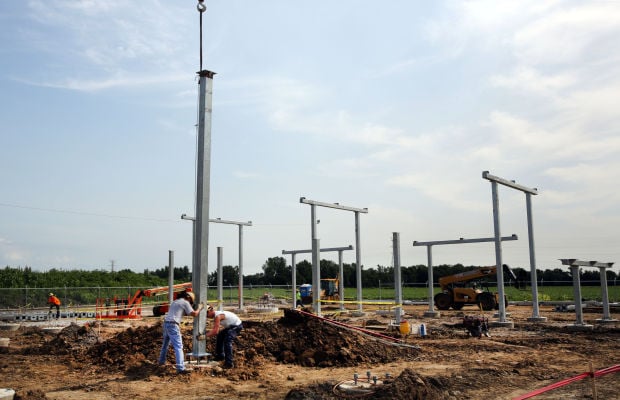
NIPSCO workers set steel beams in July at a new substation under construction south of Valparaiso. It is part of the utility's $1.2 billion electric modernization project, which was dealt a setback by the Indiana Court of Appeals this week.

Court deals setback to $1.2 billion NIPSCO modernization plan

The Indiana Court of Appeals on Wednesday dealt a setback to NIPSCO's $1.2 billion electric modernization plan, issuing a ruling that could affect similar plans by other utilities.

The court ruled the Indiana Utility Regulatory Commission erred in several respects in its Feb. 17, 2014 orders approving NIPSCO's plan. It affirmed some parts of the IURC's orders, including its interpretation of a 2 percent cap, which is a key victory for the utility.

In addition to authorizing the $1.2 billion in improvements in its February orders, the IURC approved customer charges to pay for them. Those come in the form of yearly rate increases that will total 4.9 percent by 2020, according to NIPSCO estimates.

NIPSCO and its challengers on Wednesday were still examining how the ruling might affect both the improvements and the customer charges, some of which have already been collected.

"We are analyzing today's order to determine the next steps," NIPSCO stated in an email to The Times. "The projects we've identified are necessary in modernizing our system for the future. The level of detail the Court of Appeals has requested is available, and we are confident it supports our 7-year plan."

The IURC's February 2014 order had been challenged by some of NIPSCO's largest industrial customers as well as the Indiana Office of Utility Consumer Counselor.

NIPSCO brought the case for its electric modernization plan before the IURC under legislation passed by the General Assembly in 2013. It was the first utility in the state to do so.

The industrial group challenging the IURC's orders before the Court of Appeals was composed of BP Products North America, Praxair, USG Corp., and ArcelorMittal USA.

"We are pleased with the Court of Appeals decision finding NIPSCO's plan really failed to follow the requirements of the statute," said Jennifer Terry, an attorney with Lewis & Kappes, the law firm representing the industrial group.

Terry said it is possible the industrial group could ask the IURC to order NIPSCO to refund customer charges already collected under the IURC's orders.

The industrial customers have long contended the utility should be more specific about projects it intends to undertake. The court sided with them, ruling the IURC was not provided with enough detail on the projects to approve the special charges to pay for them.

The Office of Utility Consumer Counselor is also reviewing the decision in order to fully understand its ramifications, said Consumer Counselor spokesman Anthony Swinger.

Since approving NIPSCO's electric plan in 2014, the IURC has also approved a NIPSCO natural gas modernization plan of about $800 million. It also approved a similar Vectren request for a $650 million program. And the commission is considering a $2 billion Duke Energy electric modernization.

The IURC will now have to reconsider major parts of its NIPSCO orders and may have to reopen the case. Any of the parties in the Court of Appeals case could also appeal to the Indiana Supreme Court.

The industrial group had also argued before the court that the IURC had erred in ruling utilities could hike customer bills by an amount equal to 2 percent of annual retail revenues in each year of their seven-year plan.

The industrial group contended that would allow utilities to increase rates up to 14 percent by the end of the plan, which is a far bigger increase than even in a typical rate case. The court ruled against the industrial group, finding the IURC had interpreted the statute correctly.

The court sided with the Utility Consumer Counselor in ruling that the same distribution and transmission factors should be used for industrial and residential customers in setting the new charges.

Click HERE for a link to the Court's decision> http://www.in.gov/judiciary/opinions/pdf/04081503mpb.pdf 

From the Indiana Office of Utility Consumer Counselor (OUCC) concerning other TDSIC cases:

Infrastructure & rate plans:
Duke Energy: The OUCC recommends denial.
Case still pending.
I&M: The OUCC recommends partial denial of the rate recovery request
. Case still pending.

TDSIC = Transmission, distribution and storage system improvement charge.


Who else is selling Duke’s “solar power hurts the poor” message? Please tell us!

Posted by Laura Arnold  /   April 07, 2015  /   Posted in solar, Uncategorized  /   No Comments
NC WARN Director Jim Warren

Pastor to Duke Energy CEO: Stop Targeting African-Americans with Your Anti-Solar Campaign

Letter to Duke’s Good cites curious visits by those pushing “Solar Hurts the Poor” message

A prominent Greensboro minister and community leader is calling for a meeting with Duke Energy CEO Lynn Good over the utility’s efforts to derail the growing use of rooftop solar power in North Carolina.  He criticizes Good’s targeting of African American pastors and political leaders with what he calls a cynical and disproven claim that the growing use of rooftop solar harms people with low incomes and people of color.

The Rev. Nelson Johnson, in an open letter to Good co-authored by NC WARN Director Jim Warren, also decried Duke’s aggressive lobbying against the bipartisan Energy Freedom Bill that would open the door to third party solar competition in this state, “thereby helping the same low-wealth communities for which Duke Energy now professes concern.”

As pastor of the predominantly African-American Faith Community Church in Greensboro,Rev. Johnson said he has been visited in recent months by three different individuals selling Duke’s “solar power hurts the poor” message.  In seeking the meeting with Good, the authors said Duke’s actions “are adding to its serious credibility problem with the people of this state, and we wish to share some constructive ideas for repairing this divide.”

There is abundant evidence that the “solar hurts the poor” strategy has been coordinated nationally by the electric power industry.  It has recently been rejected by the NAACP’s national board, by various state NAACP chapters, and by the congressional black caucus, among others.

Nevertheless, Rev. Johnson said today, “Duke Energy is vigorously pursuing this same deception in North Carolina.  This cynical corporate activity is an affront to the people of this state, and it is Ms. Good’s personal responsibility to stop it.”

The NAACP agrees that solar power helps communities of color for many reasons.  Chief among them is that every new solar panel helps all customers by reducing overall electricity usage, thus reducing the need to keep building expensive power plants and continually raising customer rates.

“We urge you to stop this duplicitous corporate behavior,” Johnson and Warren told CEO Good.  “We urge you, instead, to open a dialogue with us and other North Carolinians about our common interest in an energy future that benefits all communities by reducing rate increases, creating jobs, and by reducing the pollution that is harming our health and moving an already horrific global climate situation toward a disastrous future for all of Creation.”

A Profound Irony

Solar companies with strong financial backing want to install systems in this state on the property of churches, businesses, homes, and government buildings, and then sell them the power for no up-front cost and at a fixed rate that’s lower than Duke’s electricity.  But they have been inhibited by rules requiring customers to buy from their monopoly utility.  The Energy Freedom Act would change that.

“There is a profound irony in your vigorous opposition to the Energy Freedom Act,”Johnson and Warren told Good:“Because your customers are increasingly choosing solar, you’re trying force other captive customers to pay more for dirty power plants.  Then, from the other side of your corporate mouth, you’re trying to block the very avenue for those other customers to go solar.”

In other words, even if Duke were correct about solar harming low-income North Carolinians, the bipartisan Energy Freedom Bill solves that problem for many of them by eliminating the up-front cost of adding rooftop solar.

Also from the letter:  “To be clear, low-income communities are suffering under your business model.  Our communities cannot continue bearing the higher and higher electric bills that would result from your 15-year projections in the Integrated Resource Plan.

“Our communities need the many thousands of jobs that the solar power industry is bringing to this state. Duke Energy could take a leading role by helping ensure that those economic benefits are shared among traditionally disadvantaged communities. …

“In a nation heavily riven by longstanding inequities and divisions over race – and in a time when multiple parties are gratuitously exploiting and amplifying those divisions – we would welcome, with your involvement, the chance to close the gap between the public well-being and corporate leaders’ narrow focus on profit.”

Rev. Johnson, who also heads the Beloved Community Center, added today, “Reducing the cost of electrical energy for the poor, while reducing North Carolina’s carbon footprint through increased use of solar energy, reflects both moral and economic progress, which the broad religious community supports.

SeekingAlpha: Duke Energy- Solar PV Ambitions Bode Well For The Company’s Future

Posted by Laura Arnold  /   April 06, 2015  /   Posted in solar, Uncategorized  /   No Comments

Duke Energy: Solar PV Ambitions Bode Well For The Company's Future

Grist: What do conservative policy intellectuals think about climate change?

Posted by Laura Arnold  /   April 05, 2015  /   Posted in Uncategorized  /   No Comments

What do conservative policy intellectuals think about climate change?

Copyright 2013 IndianaDG