

Author Archives Laura Arnold

IURC Nominating Committee Interview of Atterholt

Posted by Laura Arnold  /   January 27, 2017  /   Posted in Uncategorized  /   No Comments

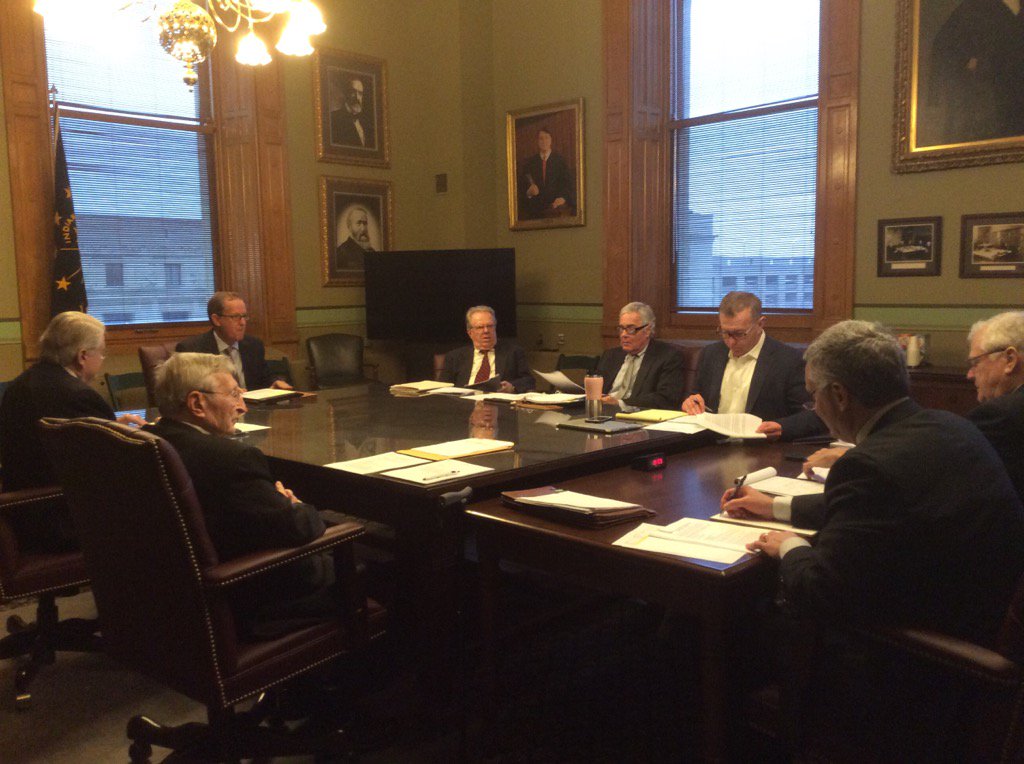
The Indiana Utility Regulatory Commission (IURC) Nominating Committee held interviews on Monday morning January 23, 2017 in the State House. The Nominating Committee interviewed the applicants in alphabetical order as follows:

  • Jim Atterholt
  • Marlene Breece
  • Eric Hand
  • Markus Turner

Jim Atteholt

Mr. Atterholt offered an opening statement in which he introduced himself and then answered the question he was sure was on the Committee’s collective mind:  Why did he want to return to the IURC in 2017 having already served on the Commission from 2009 to 2014, including as Chair for three-plus years?

Mr. Atterholt’s answer to his own question was that he had greatly enjoyed his previous public service on the Commission, believed he had made a positive difference during that service, accepted the position of Gov. Pence’s Chief of Staff only because the Governor had asked him to do so, and when he looked at what he wanted to do going forward, serving again at the Commission was where he felt he would both be happiest and be able to do the most for the citizens of Indiana.  Without summarizing it but inviting questions, he referred to his very detailed application (not posted on the IURC NC website yet that I can find) for what he believed were his contributions while serving at the Commission, as well as during his time in the General Assembly, at the Department of Insurance, and as Chief of Staff.

While he responded to several questions from Committee members, the responses most relevant to Indiana DG members probably came in two separate exchanges with Committee member Michael Mullett.

In the first, Mr. Mullett cited his view as a long-time attorney in the utility regulatory process and an adjunct faculty member teaching Public Utility Regulation and Deregulation that the production, transmission, distribution of sale of electricity at the retail level was no longer a so-called “natural monopoly.”  He also cited the Commission’s current statutory authority to approve alternative regulation or even deregulation for electric utilities previously subject to traditional regulation as vertically-integrated monopolies.  He then asked Mr. Atterholt his views, looking forward, regarding new business models and regulatory paradigms developing in the electric industry, much as they had earlier developed in the telecommunications industry.

Mr. Atterholt responded that while he was philosophically in favor of the trend toward deregulation of previously regulated industries when technological advances and market developments supported it, he was still skeptical that the Indiana electric utility industry was at a point where a transition to competition and deregulation similar to that which had taken place in the telecommunications industry would be desirable or feasible in the foreseeable future.   He said that the availability of fracked gas at historically low prices and its expanded use for electric generation had dramatically changed the cost structure of the industry, resulting in shifting significant generation from coal to gas.  He also stated that gas generation emitting only about half the CO2 emissions as coal generation had contributed to that shift.  And, he thought that wind generation had really taken off in northern Indiana lately to become a significant renewable generation source.   But, he thought solar generation was still too expensive to be a second major renewable generation source, although it could become one if its declining cost trend continued.  Overall, he believed that the major constraint on both wind and solar was their intermittent nature, which could only be overcome by deployment of significant electricity storage facilities, especially large batteries, like the one which IPL had recently deployed here in Indianapolis on something of an experimental basis.  So, he envisioned an extended period during which gas generation would serve as a bridge to renewable sources like wind and solar.  During that transition period, he expected that the traditional business and regulatory models for utilities would continue to apply, especially in states like Indiana.

Mr. Mullett followed up with a question about how Mr. Atterholt felt about the Midwest Independent System Operator and its wholesale market mechanisms.  Mr. Atterholt indicated that he was a big fan, very enthusiastic about MISO and similar Regional Transmission Organizations or RTOs around the country and the transformation they had brought to the wholesale market for electricity, including here in Indiana.  But, he expressed skepticism that “Open Access Distribution” at the retail level analogous to the “Open Access Transmission” which RTOs had brought to the wholesale level would develop here in Indiana any time soon.

In the first place, Mr. Atterholt read the results of prior efforts at competition and deregulation at the retail level in other states to be mixed, with unresolved issues relating both to service reliability and price stability.  He was especially concerned about whether these regimes provided sufficient economic incentives for the construction of enough new capacity to meet future needs for electricity reliably and affordably.

In the second place, Mr. Atterholt saw the situation here in Indiana as one where the utilities simply had too much investment in their own existing generation sources to make a rapid, large-scale transition to newer, cleaner sources owned by others, whether customers or competing electricity suppliers.

Mr. Mullett also asked Mr. Atterholt about the Indianapolis Star article from August 2011 headlined “Too Close for Comfort,” which had reported that he had had several communications with Duke Energy officials which posed ethics questions leading up to the scandal which engulfed several former Commission officials, including former Chair David Hardy, former Chief Administative Law Judge Scott Storms, and former Executive Director Mike Reed, as well as former Duke Energy Executive Vice President Jim Turner.  Highlighted in the Star article had been an e-mail from April 2010 in which Mr. Atterholt had recommended a long-time Duke Energy lobbyist,  Julie Griffith, to become President of Duke Energy Indiana.  In the event, the Company had appointed Mr. Reed instead.

Mr. Atterholt explained that, with 20-20 hindsight, he would not have sent the e-mail recommending Ms. Griffith.  But, at the time, be believed that it was important to signal Duke that not everyone on the Commission was backing Mr. Hardy’s effort to have Mr. Reed appointed.  He believed this was important because Mr. Hardy had been a bad Chairman for the Commission, rewarding people he liked and who supported him while punishing people he did not like or had crossed him.  This had really affected Commission morale.  He mentioned by name former Commissioners Greg Server and Jeff Golz in that context.  In the end, Mr. Atterholt said, the Governor fired Mr. Hardy as Chair and appointed Mr. Atterholt to replace him.  And, Mr. Atterholt felt that he had provided new leadership and implemented reforms that had addressed the problems which had resulted in the scandal.

In this regard, Mr. Atterholt mentioned specifically separating the positions of General Counsel and Chief Administrative Law Judge so as to better protect the Commission’s decision-making in contested cases from the potential influence of ex parte communications.  He also mentioned noticed public meetings with utility officials and representatives of other interests involved in the regulatory process as a reform addressing the risk of undue influence.  Finally, he mentioned making sure that the expenses of conferences and other events which the Commission sponsored or its members and employees attended be paid for by the Commission from funding sources other than the utilities they regulate.   He said he was proud of these reforms he had implemented during his time as Chair and pleased that his successor had continued them.

NOTE: Time permitting brief summaries of the other three applicants will be shared in a later post.


Majority of Americans want to see more support for renewable energy

Posted by Laura Arnold  /   January 26, 2017  /   Posted in Uncategorized  /   No Comments

Majority of Americans want to see more support for renewable energy

Renewable Energy Support

Recent survey shows that many people support clean power

A major shift in energy and climate policy may be coming to the United States now that Donald Trump has officially taken presidential office. Trump has vowed to reduce regulations on the coal and oil industries in order to promote economic growth. The Trump Administration is also expected to reduce support for various forms of renewable energy, but many of those living in the United States want the government to continue investing in clean power for the sake of the environment and the economy.

Pew Research Center finds that majority of Americans want renewable energy to become a priority for the US

According to a recent survey from the Pew Research Center, the majority of Americans (65%) believes that renewable energy should be a major priority for the government. The survey found that only 27% would prefer a greater emphasis on expanding the production of fossil-fuel energy systems. Support for renewable energy has become a heavily politicized issue, largely due to the association clean power has to climate change. Despite political division, however, both Democrats and Republicans in the United States believe that renewable energy should receive more support.

Climate change remains a divisive issue

Climate change has become a major issue in the United States, with many politicians suggesting that this phenomenon is either one of the greatest threats facing the country or simply a non-issue. The ideology surrounding climate change often affects the view that people have concerning renewable energy. Those that believe climate change to be a threat tend to show more support for the expansion of renewable energy and limiting the use of fossil-fuels. Those that believe climate change is nothing serious tend to show less support for clean power, according to the survey from the Pew Research Center.

Economic prospects could ensure the growth of the renewable energy space

While any potential changes to the country’s energy policy have not yet been set in stone, energy experts throughout the country have expressed concern that the Trump Administration could have a detrimental impact on the renewable energy space. Some analysts are convinced that the economic prospects of renewable energy will ensure the continued growth of this sector, however, even without government support.

Legislation in Indiana could curtail the growth of the solar energy market

Posted by Laura Arnold  /   January 26, 2017  /   Posted in 2017 Indiana General Assembly, solar  /   No Comments

Legislation in Indiana could curtail the growth of the solar energy market

Solar Energy Market - Sunset in Indiana

Lawmakers seek to remove net metering from the solar energy market

New legislation has been introduced in Indiana that aims to bring about major changes to the state’s solar energy market. The legislation intends to remove net metering, which has long been a major incentive encouraging homeowners and businesses to embrace solar. Solar supporters fear that without net metering, many people may be prevented from using the electricity generated by their own solar panels. This could also limit the number of people able to enter into the solar energy market.

Removal of net metering would come about in 2027

While the legislation does intend to remove net metering, this will not be an immediate action. The removal of net metering would not come until 2027. The legislation also seeks to prevent the Indiana Utility Regulatory Commission from replacing net metering with compensation options for solar customers. If successful, the legislation would establish a “buy-all, sell-all” system, which could prevent consumers from using the electricity that their installed solar energy systems produce. This system would force consumers to sell all of this energy to the state’s energy grid at a low rate, only to purchase this electricity again at a higher cost.

Legislation could take away solar ownership

Opponents of the legislation note that it represents a radical change in the state’s energy policy, particularly where the solar energy market is concerned. Laura Arnold, president of the Indiana Distributed Energy Alliance, suggests that the legislation would effectively ensure that homeowners do not own their own solar panels while also dictating how they can use the electricity that their solar panels produce. Supporters of the legislation, however, suggest that it will ensure that solar customers are treated in the same manner as other energy generators and help ensure the stability of the state’s energy grid.

Solar energy market could see major change in the future

Indiana’s solar energy market could experience major upheaval in the near future. Some lawmakers have shown strong support for the solar energy market, but others have expressed concern that there is a major imbalance between solar customers and regular consumers. This imbalance has lead those without solar power systems to pay more for the electricity they consume.

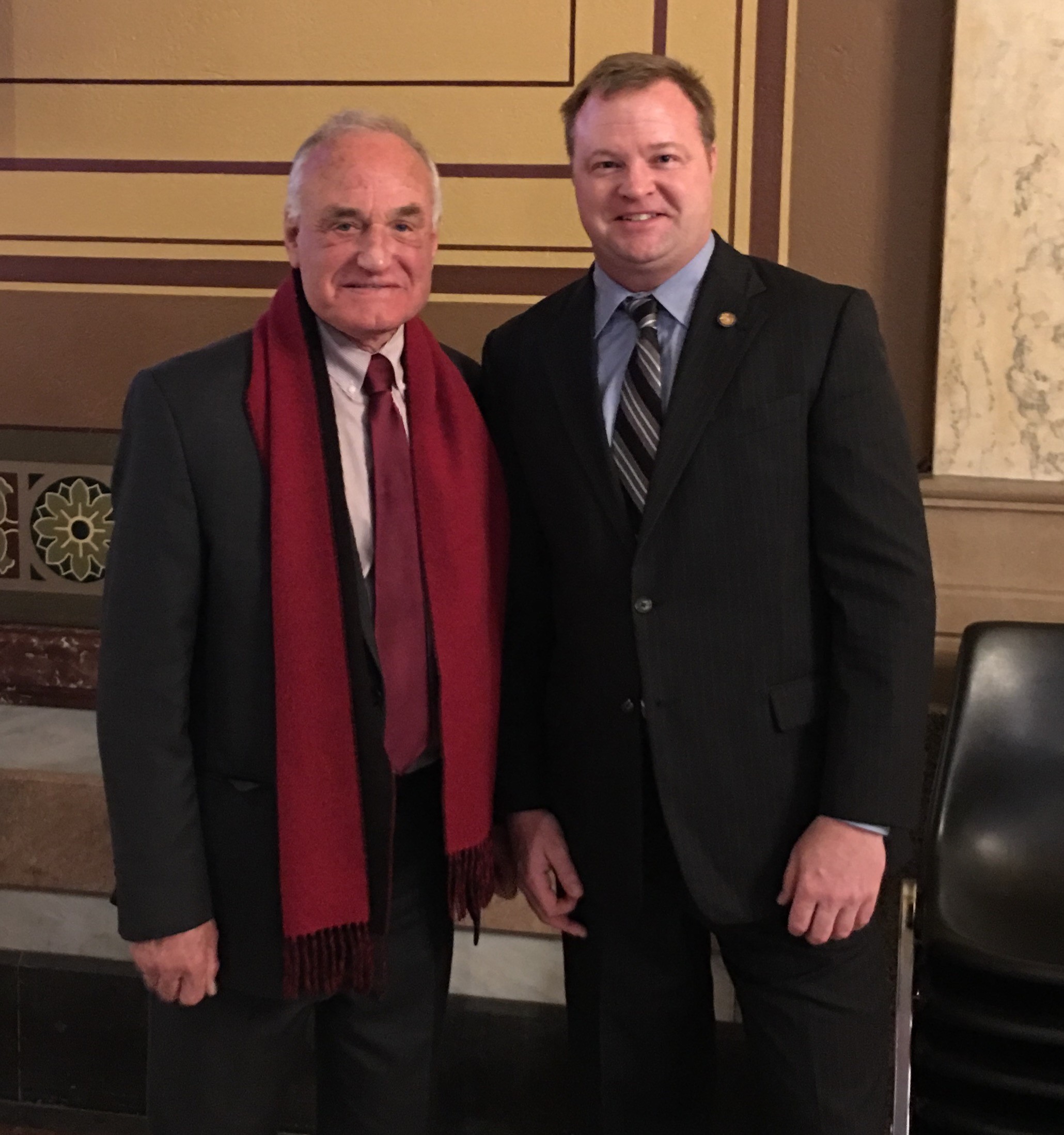
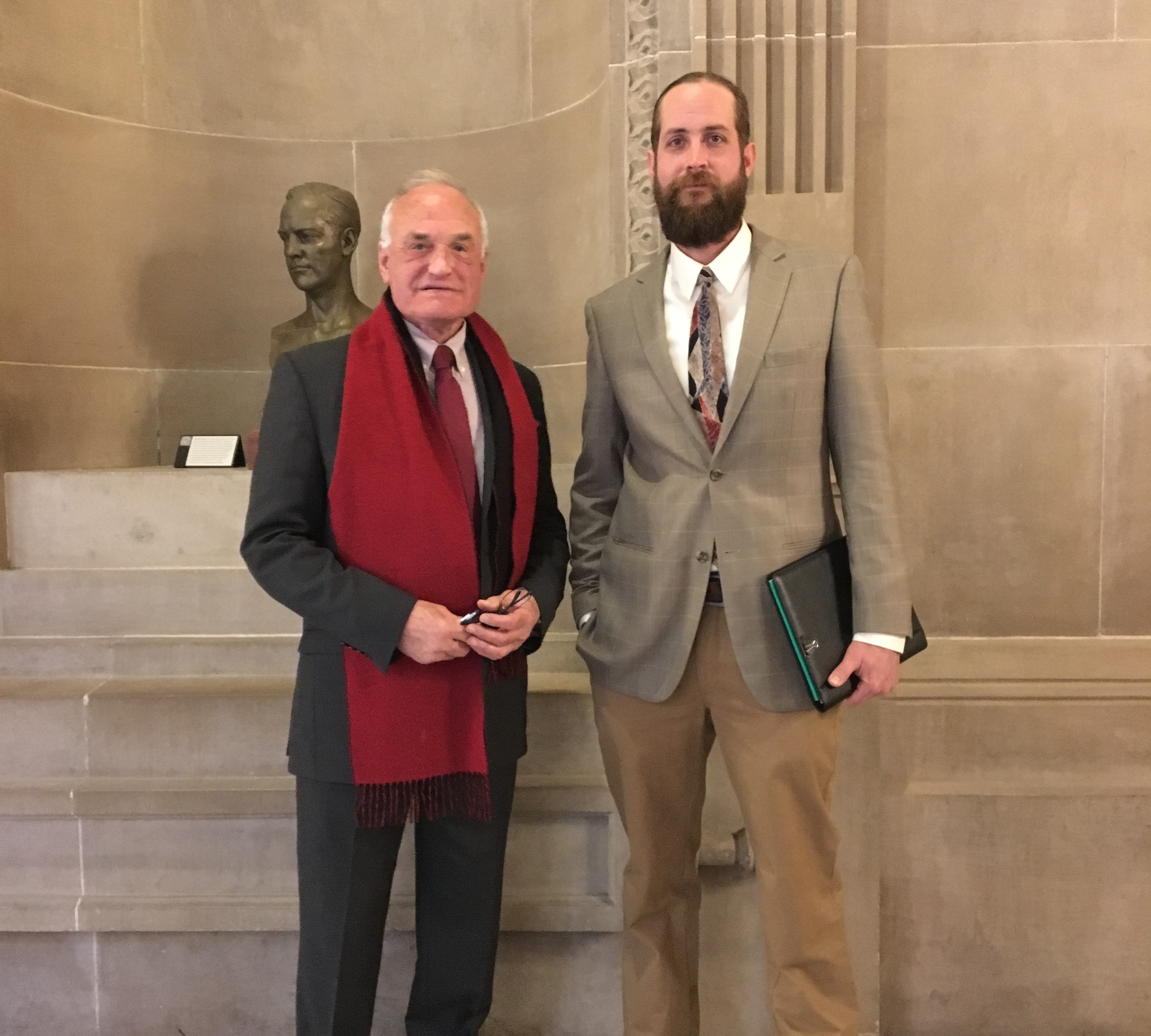
Barry Goldwater, Jr. at Indiana State House with Rep. Mike Speedy; Ryan Zaricki with Whole Sun Designs; Rep. Jerry Torr

Posted by Laura Arnold  /   January 26, 2017  /   Posted in solar, Uncategorized  /   No Comments

Barry Goldwater Jr and Rep. Mike Speedy

Left to right: Barry Goldwater, Jr. and Indiana State Rep. Mike Speedy (R-Indianapolis)


Barry Goldwater Jr and Ryan Zaricki

Left to right: Barry Goldwater, Jr. and IndianaDG member N. Ryan Zaricki with Whole Sun Designs.

Rep Jerry Torr and Barry Goldwater Jr.

Left to right: Rep. Jerry Torr (R-Carmel) and Barry Goldwater. Jr.

If you don't know about Barry Goldwater, Jr.'s work supporting solar, please see a few of these past posts:


TUSK Goldwater: “HB 1320 was a direct utility power grab, an attack on conservative values”

Tell Utilities Solar Won’t Be Killed (TUSK) Joins fight to Oppose Indiana HB 1320

Midwest Energy News: Q&A: Barry Goldwater, Jr.’s fight for solar power

Barry Goldwater Jr. to Michigan conservatives: Rooftop solar is about choice, freedom and liberty

TUSK: Barry Goldwater, Jr. Asks Michigan Legislators to Maintain Energy Choice; Reject SB 438

To see more articles about Barry Goldwater, Jr. and his work as the Chairman of Tell Utilities Won't Be Killed (TUSK), just type "Goldwater" into the Search Box. There is more!

Help us stand up to utility monopolies to ensure solar energy remains strong in America.

Indiana Senate Bill 309 would get rid of net metering — a huge solar incentive — if passed

Posted by Laura Arnold  /   January 25, 2017  /   Posted in 2017 Indiana General Assembly  /   No Comments

Bill would get rid of net metering — a huge solar incentive — if passed

webcisolar338

When oil spills in the ocean, it can cause devastating pollution. The resource does damage to its surroundings, but when sunlight spills down from the sky, it’s not a disaster.

Darrell Boggess smiles when he finishes his analogy. It’s just a sunny day.

So a sunny day like last Saturday — a rare bright afternoon in January with temperatures in the 60s — must be an exceptional spill of clean energy. On days like this, when the sun is beating down, solar panels soak up sunlight. During the day, though, the solar user probably won’t need all that energy, and so it can be sent back into the energy grid.

Boggess, a solar user and member of the Solar Indiana Renewable Energy Network, a local group that educates and promotes solar usage throughout the state, said his neighbors may use energy produced by his panels. He’ll be compensated for this at the retail price for solar energy.

Then at night or on cloudy days when his solar panels can’t provide him sufficient energy, the system pulls back from the grid, and he’ll get billed for this at the retail price.

When he takes energy out of the grid, the cost is added to his bill. When he adds to the grid, the cost is subtracted from his bill.

This concept — the give and take of energy to and from the grid and the subsequent adjustment of a user’s energy bill — is known as net metering. Net metering allows those who generate their own electricity to be compensated at the retail rate for excess they don’t use.

But if a new bill passes this legislative session, it could be illegal in 10 years.

Senate Bill 309, authored by Sen. Brandt Hershman, R-Buck Creek, would outlaw net metering completely after 2027 and forbid net metering for any customers before 2027 after 1 percent of all energy used in a particular utility company is generated by a customer-owned source, like a solar panel, rather than by the utility company.

Hershman did not respond to requests for an interview in time for this story to be published in order to justify his reasoning for the bill.

Without net metering, customers would be compensated at dramatically lower wholesale rates for energy they send back to the grid rather than retail rates.

The bill includes a buy-all-sell-all provision. When users produce energy in their panels, that energy would go straight into the grid and the user would be compensated at the wholesale value only to have to buy back the energy at a higher retail value.

Solar users say this would deal a huge blow to the clean energy industry. Some people choose to use renewable energy out of concern for the planet’s well being, Boggess said. But some choose to use it because it saves money. Boggess thinks getting rid of net metering would get rid of many of the second type of customer and cause solar companies to take their business away from the state.

“There is a predictable consequence,” Boggess said.

A bill similar to SB 309 was introduced in the House two years ago but didn’t advance. The Hoosier Environmental Council, an Indiana environmental advocacy group, was aware of and involved in fighting against the last one and is keeping an eye on the current one. Rumors are flying around about a potential hearing date for SB 309, but one hasn’t been published yet on the Indiana General Assembly website.

Jesse Kharbanda, executive director of HEC, said net metering’s principal purpose is to promote non-polluting forms of energy. Several 
government-commissioned studies have shown the value of solar to the energy system is worth more than the retail rate of electricity, Kharbanda said.

Not only are solar panels zero-polluting sources on the grid, but they also help to improve the overall energy security on the grid, he said.

Kharbanda has an idea why someone may not support the concept of net 
metering.

Part of it is a misconception that net metering is a subsidy for using solar power, but this is not accurate, he said.

Boggess dispels this misconception, too. The argument from electric companies that net metering isn’t fair is just not true, he said.

Electric companies will tell elected representatives solar users pay less, and therefore others pay more, he said.

“It’s worse than a myth,” Boggess said. “It can’t happen that way.”

He also said studies have shown the net value from net metering is worth more than what the user gets compensated. Solar users invest thousands of dollars in equipment that utility companies don’t have to buy, Boggess said. It saves money for the whole grid.

This backlash to solar energy usage isn’t specific to Indiana. According to a post on the Brookings Institution, a think tank and research group, utility interests in several states have reached out to legislators to try to convince them that net metering is actually a net cost to the grid.

An extreme example from the Brookings article shows how drastically an end to net metering could affect the solar usage in a state. In 2015, the Nevada Public Utilities Commission substantially cut the state’s net-metering payments and caused the three largest providers of rooftop solar panels in the state to completely leave Nevada’s market.

The effect was immediate. New residential solar installation permits took a nosedive and went down 92 percent in 2016’s first quarter.

SB 309 would not immediately cut off net metering to this degree, so the effect may not be as drastic here, 
Kharbanda said. However, it’s still a cause for concern and may have a chilling effect on investment.

“Utilities are not going to hit 1 percent in three months or six months,” Kharbanda said. “It’s going to be maybe three years, maybe five years.”

In contrast with the rest of Indiana, Bloomington is “kind of off the charts” for solar usage, said Woodie Bessler, also a volunteer with SIREN.

The city of Bloomington, too, is concerned about this bill, said sustainability coordinator Jacqui Bauer. In contrast with Hershman’s idea, Bloomington recently announced their Solarize Bloomington Campaign, an initiative to install solar panels on some city buildings and to work with solar installers in offering a discount to local residents and businesses.

Bauer said panels will be installed on City Hall and the police headquarters, with hopefully more additions to come in the future.

According to a December press release, the new City Hall system will provide almost 40 percent of the building’s total energy needs, which will in turn save Bloomington and local taxpayers more than $35,000 each year. Interested parties can get involved by going to tinyurl.com/solarizebloomington.

The release says Bloomington will work with SIREN and solar installers Whole Sun Designs and Solar Energy Solutions to offer a discounted rate of 2.62 per watt. Nationwide, the average is about 3.50 per watt, Bauer said.

At a Monday morning meeting regarding the program, Boggess said he learned in just one month, more than 200 people have signed up for Solarize Bloomington.

Indiana’s slogan is “the state that works.” If this is true, the state needs to make it possible for solar companies to continue their work in the state, Boggess said. The underlying issue with the bill is a question of values and priorities, he said.

“Does the state of Indiana want to encourage more renewable energy?” he said. “If the answer is yes, well, this bill takes you the other direction.”

Please note All comments are eligible for publication in The Indiana Daily Student.

Copyright 2013 IndianaDG